

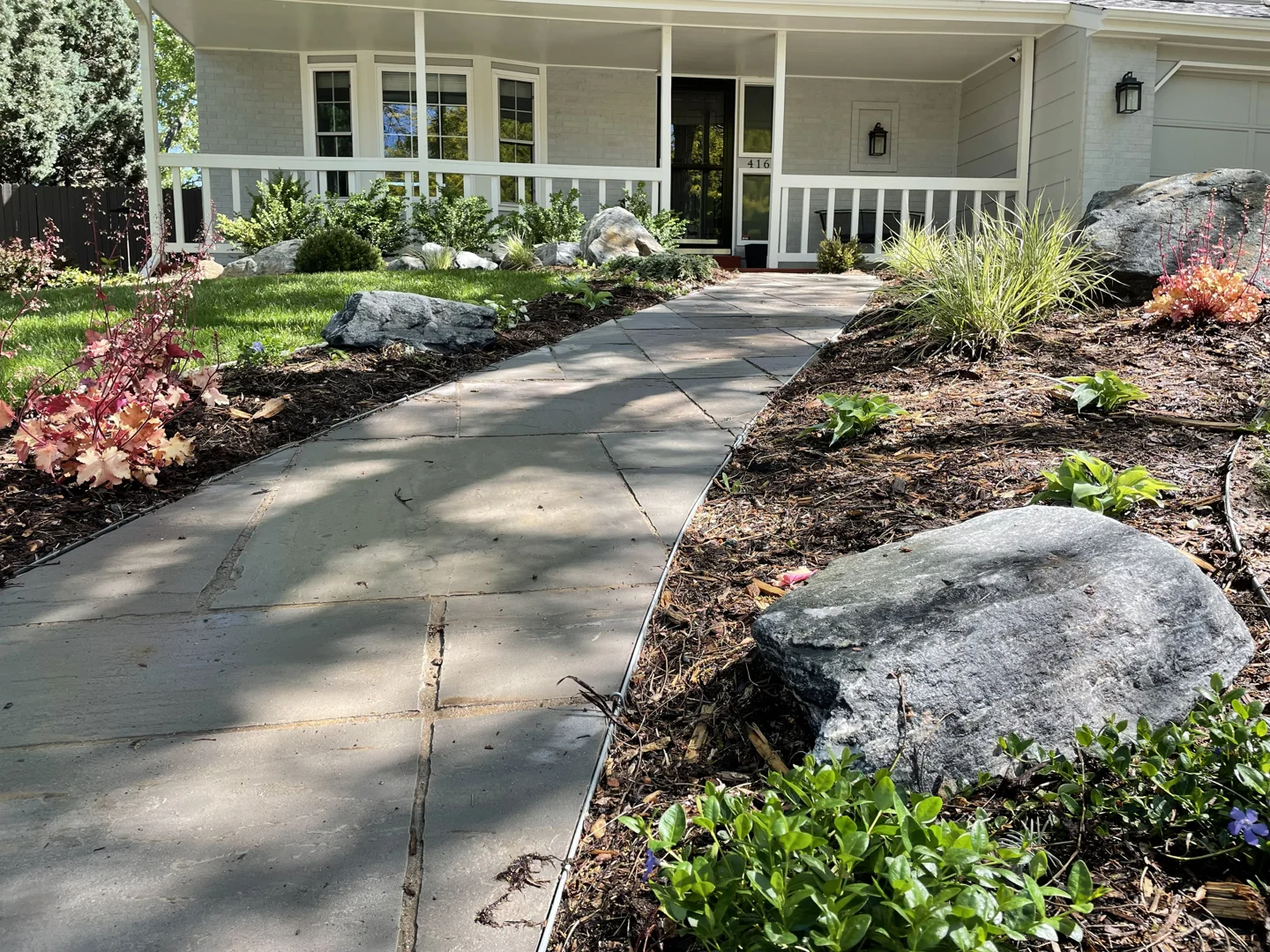
Seasonal Planting and Garden Maintenance Tips for Boulder Xeriscape Homeowners
Stone & Leaf Landscaping has over 17 years experience installing yards across Boulder and the surrounding Front Range, and we can tell you honestly: most of the water waste and plant failures we see come down to one thing; Homeowners are working against Boulder’s climate instead of with it. With the City of Boulder’s Drought Watch declared in April 2026, there’s never been a better time to think seriously about Boulder xeriscaping design as the right long-term answer for your yard. This guide walks you through what to do every season to build and maintain a water-wise landscape that actually performs here.
A few notes here before diving in. Effective xeriscaping in Boulder reduces irrigation needs from 25-30 inches per season (traditional turf) to roughly 12-15 inches. The best planting windows are late August through September and April through mid-May. Spring is the top season for installation planning, but fall delivers stronger root establishment. Water before 10 a.m. or after 6 p.m. under Boulder’s current Drought Watch, no more than twice per week.
About Stone & Leaf Landscaping:
Hayden Griess is the owner of Stone & Leaf Landscaping and has over 17 years of hands-on Boulder and Front Range experience. With completed landscape design coursework during the off-season, Hayden is personally on site every single day, and has led hundreds of complete installations including xeriscape transformations, blank-lot builds, and HOA-compliant designs. Stone & Leaf holds Thumbtack Top Pro status (2017-2020) with a 4.7-star rating across 95 verified client reviews.
"Hayden's crew turned our unusable slope into a xeriscape retreat. On time, on budget, and fun to work with."
Jess K., Boulder homeowner
Learn more about Hayden’s credentials and approach.
What Boulder Homeowners Need to Know Before Planting Anything
Boulder sits at about 5,400 feet in a semi-arid climate that receives only around 20 inches of precipitation annually. A traditional bluegrass lawn needs 25-30 inches of supplemental irrigation each season just to survive here. That gap between what the sky gives you and what your yard demands is exactly where most local lawn design decisions go wrong.
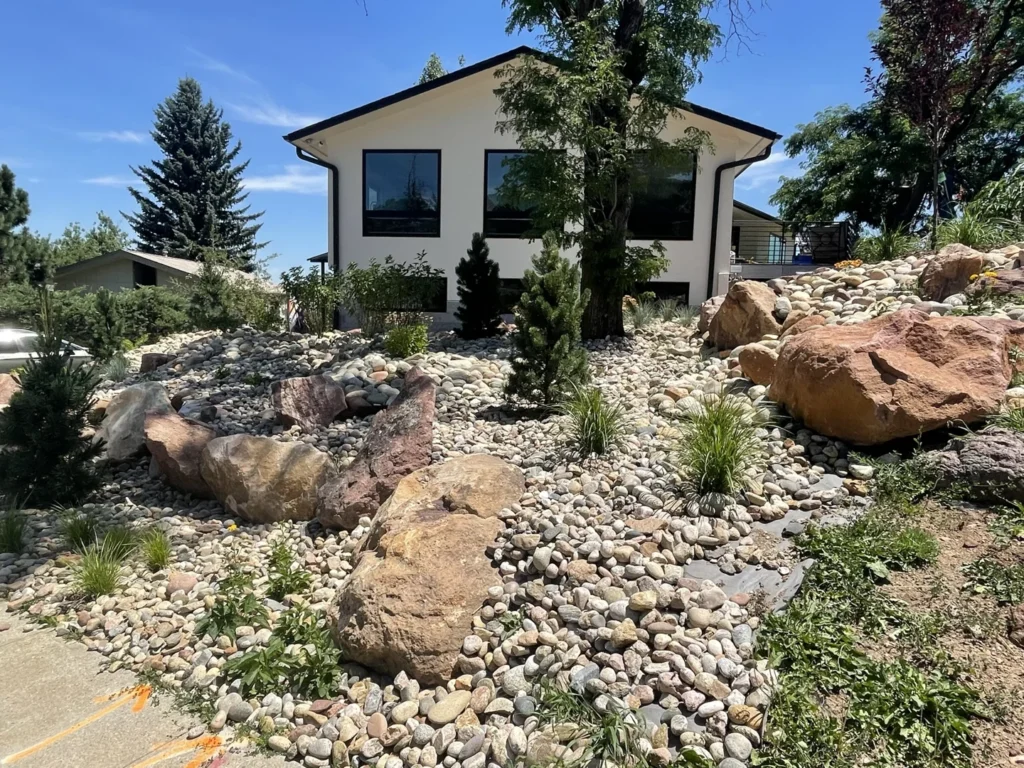
Soil conditions vary more than most homeowners expect, and not just from neighborhood to neighborhood. In some parts of Boulder, you’re working with heavy clay that holds water too long and compacts around roots. Across the street, the soil might be sandy loam that drains so fast that shallow-rooted plants dry out between waterings. This block-by-block variability is something I’ve learned to assess on every single site visit before recommending a single plant or irrigation zone.
Front Range sun intensity is another factor that trips people up. A plant labeled for “full sun” in Ohio or the Midwest is calibrated to a different intensity of UV exposure than what Boulder delivers at altitude. Many plants that thrive in full sun elsewhere actually do better on an east or north-facing exposure here, where they get morning sun and afternoon shade. Then there are Chinook winds, which can pull moisture from plant tissue and soil during warm winter days faster than most homeowners realize, even when temperatures are technically above freezing.
HOA communities in Erie, Broomfield, Lafayette, and newer Boulder-area developments often impose landscaping completion deadlines that add real time pressure to design decisions. Getting a plan in place early is not just smart gardening; it is sometimes contractually required.
Not sure if spring or fall is right for your yard? See how we solve this with a free on-site consultation.
Spring: The Most Important Season for Boulder Garden Design
Spring is where we see the biggest opportunity, and also the biggest mistakes. It’s the season where a solid plan translates directly into less work, less water, and healthier plants for the next three to five years. It is also the season where impatient planting decisions cost people the most money.
The single most useful timing rule we give every Boulder homeowner is this: do not plant warm-season species until around Mother’s Day. That mid-May window is when the risk of a hard frost finally drops to a manageable level in Boulder. I have seen clients lose full trays of plants to a late April cold snap because they jumped the gun by a few weeks. The Mother’s Day rule is easy to remember and it works.
Before you get anywhere near planting, early spring tasks set everything else up:
- Ornamental grasses and perennials that were cut back in fall need to be cleared before new growth emerges.
- Mulch that has thinned over winter should be replenished before the heat arrives, because replacing moisture lost from bare soil in June costs far more water than a fresh mulch layer in April.
- Drip irrigation lines that survived the winter still need to be inspected.
- Check emitters for clogs, flush the lines, and confirm pressure is consistent across all zones before the system runs in earnest.
Boulder’s April 2026 Drought Watch makes spring planning even more important this year. Grass irrigation is restricted to before 10 a.m. and after 6 p.m., with a maximum of two waterings per week recommended. If your yard still has large turf sections, this is the spring to start replacing them with specific xeriscaped zones. For plant selection, penstemons, blue grama grass, Apache plume, and rabbitbrush are all strong spring-install candidates because they establish during the spring moisture window before summer heat peaks. For a broader look at native plant options for Boulder yards, we cover the full range of pollinator-friendly species that perform well on the Front Range.
Ready to plan your spring planting? Let’s talk through your site at no cost or obligation. You can also call directly at 720-338-3002.
Spring Xeriscape Installation: What to Do First
Follow these steps in order and you will avoid the most common and expensive spring mistakes.
- Test your soil before spending a dollar on plants. Boulder’s clay-heavy patches need different amendments than its sandy loam pockets, and drainage zone planning depends entirely on what you are working with.
- Map your sun and wind exposure across the full day. Note where Chinook winds hit hardest (typically open west-facing areas) and where afternoon shade offers plant protection. This map drives placement decisions for every species you choose.
- Design your drip irrigation zones before planting, not after. The irrigation layout determines where plants go, not the reverse. Grouping plants by water need (a practice called hydrozoning) is the foundation of a functional xeriscape design.
- Choose plants rated for USDA Zone 5b with Front Range heat tolerance specifically. Boulder’s zone rating is 5b, but the altitude and sun intensity push plant performance beyond what standard zone ratings predict.
- Apply 3-4 inches of wood chip or gravel mulch before you put a single plant in the ground. Mulching first cuts establishment watering needs significantly during those critical first weeks.
For deeper technical detail on every one of these steps, explore our full Boulder xeriscape guide.
Summer Maintenance for a Boulder Xeriscape That Stays Healthy
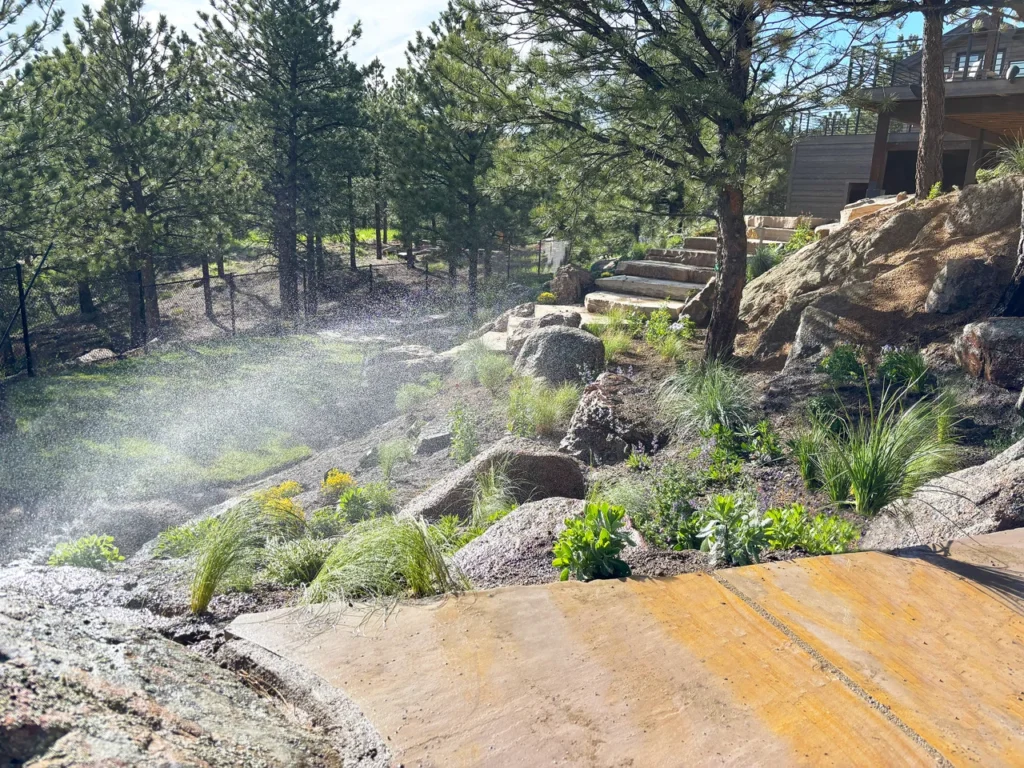
Once an effective xeriscaped landscape is established, typically after one full growing season, it handles Boulder’s summer heat in a fundamentally different way than a turf lawn. The goal shifts from frequent shallow watering to deep, infrequent watering that encourages roots to chase moisture downward rather than sitting near the surface. That deeper root structure is what lets properly designed xeriscape survive heat weeks that would stress or kill a conventional lawn.
Boulder’s Drought Watch restrictions apply to grass irrigation, but smart drip irrigation zoning means you do not have to babysit your system to stay compliant. We set up drip systems to water before 10 a.m. automatically, which keeps homeowners within the Drought Watch window without manual intervention. For help with drip irrigation installation in Boulder, we handle full system design and zoning as part of every xeriscape installation.
Summer maintenance tasks are lighter than most homeowners expect. Deadheading spent blooms on penstemons, blanket flowers, and catmint keeps plants productive through the season without triggering the flush of new growth that demands more water. Light trimming in mid-summer keeps aggressive growers like rabbitbrush from shading out neighbors. One pest to watch for is the Japanese beetle, which targets roses and certain shrubs and can defoliate them quickly if not addressed in early July.
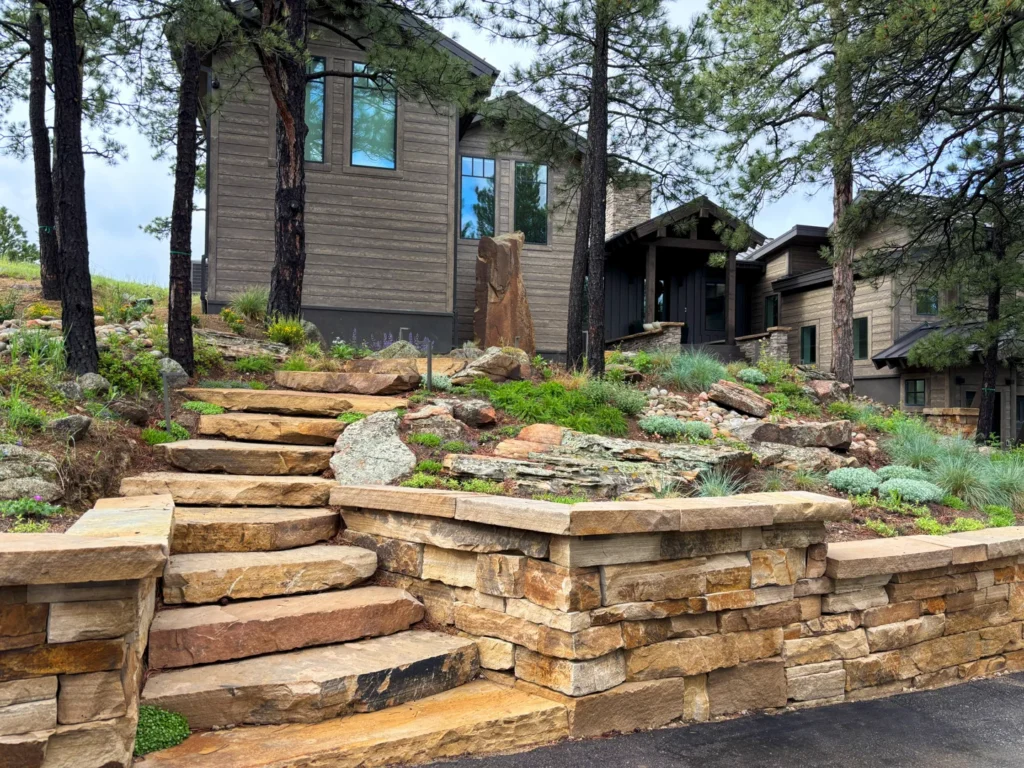
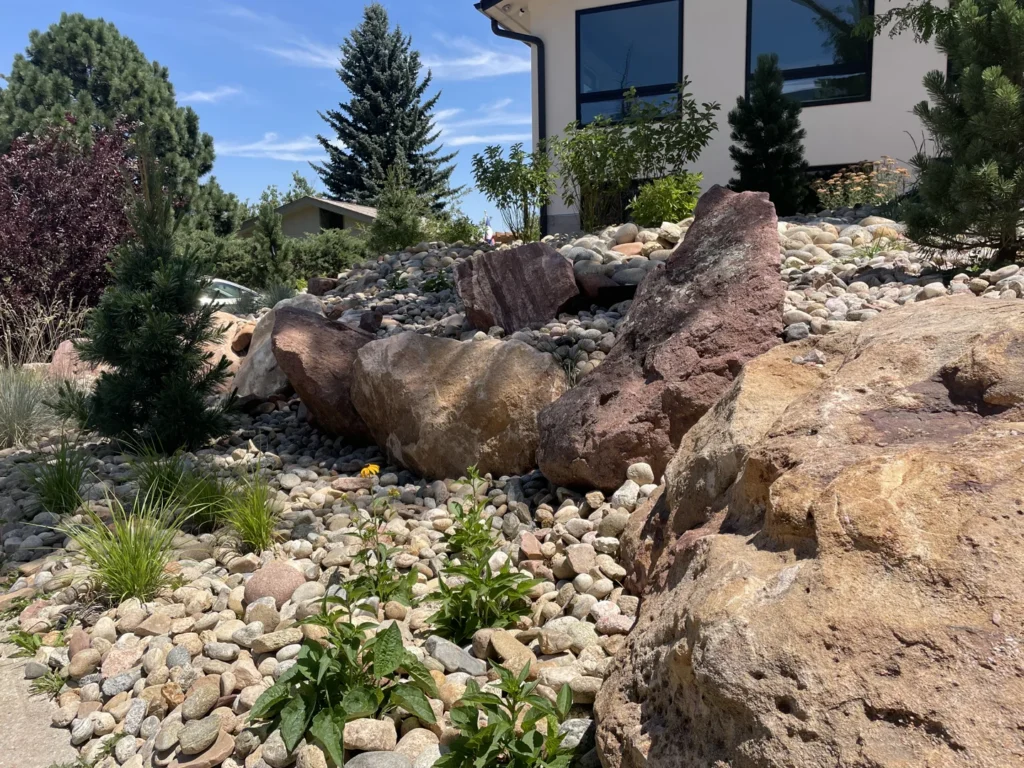
Half-buried stones and boulders do more than look good. They shade the soil directly beneath plant crowns, slow evaporation, and create small microclimates where moisture lingers longer. We incorporate them intentionally with our complete garden design projects, not just as aesthetic features, because they measurably reduce watering frequency around plant crowns.
A well-designed xeriscape cuts your water bill roughly in half. Schedule your free summer garden audit with Stone & Leaf Landscaping, he’s on site every day and will walk your yard with no charge or estimate pressure. Our 15% do-not-exceed pricing guarantee means no surprises. Call 720-338-3002 to set it up.
How Boulder's Drought Watch Affects Your Watering Schedule
Under the current drought watch, with current restrictions, grass irrigation is limited to before 10 a.m. and after 6 p.m., with a recommendation of no more than two waterings per week. These windows matter because mid-day watering loses a significant percentage of water to evaporation before it ever reaches roots.
A mature, well-designed xeriscaped landscape uses roughly 12-15 inches of supplemental irrigation per season compared to 25-30 inches for traditional turf. That is close to a 50% reduction in landscape water use, which translates directly to lower water bills as Boulder’s water rates have increased in recent years. The return on investment for converting turf to xeriscape is real and measurable over a three-to-five-year window.
Stone & Leaf drip irrigation systems are designed and zoned to operate within current Drought Watch windows automatically. For a full look at water-smart design principles and current conservation resources, see our article on practical Boulder landscaping strategies to save water and money.
Fall: The Underrated Season for Boulder Yard Design and Planting
Most homeowners in Boulder put their yards to bed in September and do not think about planting until April. That is a mistake we’ve been correcting for years. Fall is the second-best planting window on the Front Range, and in some ways it is better than spring for perennials and shrubs.
Soil in September is still warm from summer, which drives root development even as air temperatures cool. Natural precipitation typically increases in fall, reducing supplemental watering needs during the establishment period. Plants installed in mid-August through September develop deeper, more resilient root systems before they go dormant than spring-planted equivalents that get hammered by early summer heat before they are established.
Fall mulching is not optional here. A 3-4 inch layer applied in late September protects plant crowns and root zones from two serious Front Range risks: Chinook wind desiccation and freeze-thaw soil heaving. Without proper mulch depth, warm winter days followed by hard freezes can push newly installed plants right out of the ground.
Irrigation winterization timing is another fall priority that homeowners consistently miss. Boulder’s first hard freeze typically arrives in mid-October, and drip lines need to be blown out before that date. Frozen water in irrigation lines causes damage that does not show up until you try to run the system the following spring.
HOA deadlines add urgency for local homeowners where newer developments often require landscape improvements to be complete by fall. When a formal submittal is needed, Stone & Leaf Landscaping can help with CAD drawings for HOA approval, which takes that headache off your plate entirely. Visit our Boulder Landscape Design & Lighting service page for a full look at how we handle Boulder yard design that accounts for fall planting windows, giving you a full season’s head start on spring color and stability.
Fall Plant Selection and Planting Timeline
The best fall-install plants for xeriscapes include autumn sage, desert marigold, Russian sage, blanket flower, catmint, and sedums. These species have proven track records with fall installation on the Front Range, and they come back stronger the following spring than the same plants installed in May.
Timing matters. Mid-August through mid-September gives plants enough time to establish root systems before the ground hardens. Planting in late October is a gamble that rarely pays off here.
Apply mulch in late September after installation, not earlier, so the soil has time to absorb fall moisture before the layer goes down. Stone & Leaf handles fall installation and same-day mulching as a standard part of our process, so newly installed plants are protected from day one.
Winter: Dormancy, Damage Prevention, and Early Spring Prep
Winter in Boulder is not a rest period for your yard. Chinook winds create the most damage of any seasonal risk, and most homeowners do not prepare for it properly. A 55-degree January day followed by a hard freeze that same night creates freeze-thaw cycles that heave plant crowns out of the soil and crack the tissue of inadequately mulched root zones.
Proper mulch depth, 3-4 inches maintained through the winter, is the most important single thing you can do before temperatures drop. Check mulch levels in late October before the first hard freeze arrives, and add material wherever coverage has thinned since fall.
Irrigation winterization must be complete by mid-October without exception. Stone & Leaf’s winterization service includes full system flushing and pressure testing so you know the lines are clear before freeze season. Frozen drip lines crack at fittings and emitters in ways that are invisible until spring, when you find yourself re-running lateral lines you paid for two seasons ago.
Dormant oil spray applications in late November are worth the effort for homeowners dealing with aphids, scale, or spider mite history on their shrubs. The oil smothers overwintering eggs and spores before they get a foothold next spring.
Snow cover is actually beneficial for plant zones. It insulates soil, prevents desiccation from wind and sun, and maintains more stable soil temperatures than bare ground. Resist the impulse to clear snow off plant beds to tidy up the yard.
January and February are the best months for planning spring installations. Design slots and plant availability both get tight by late February, so starting the conversation in winter means you are ready to move the moment soil conditions allow.
Schedule your spring consultation now, spring design slots book up by late February, and Stone & Leaf starts planning in January. Don’t wait until April to start the conversation.
For guidance on winterization and irrigation maintenance specific to Front Range systems, visit our Sprinkler, Sod & Drainage Services page.
The Stone & Leaf Approach: Seasonal Planning for Long-Term Success
Every seasonal recommendation in this guide comes from over 17 years of working in Boulder-area yards. We’ve seen what happens when spring planting skips soil testing, when summer irrigation runs mid-day during a Drought Watch, when fall mulching gets skipped because “it’s just going to snow anyway,” and when irrigation lines are not blown out until November. The failures are predictable. So are the fixes.
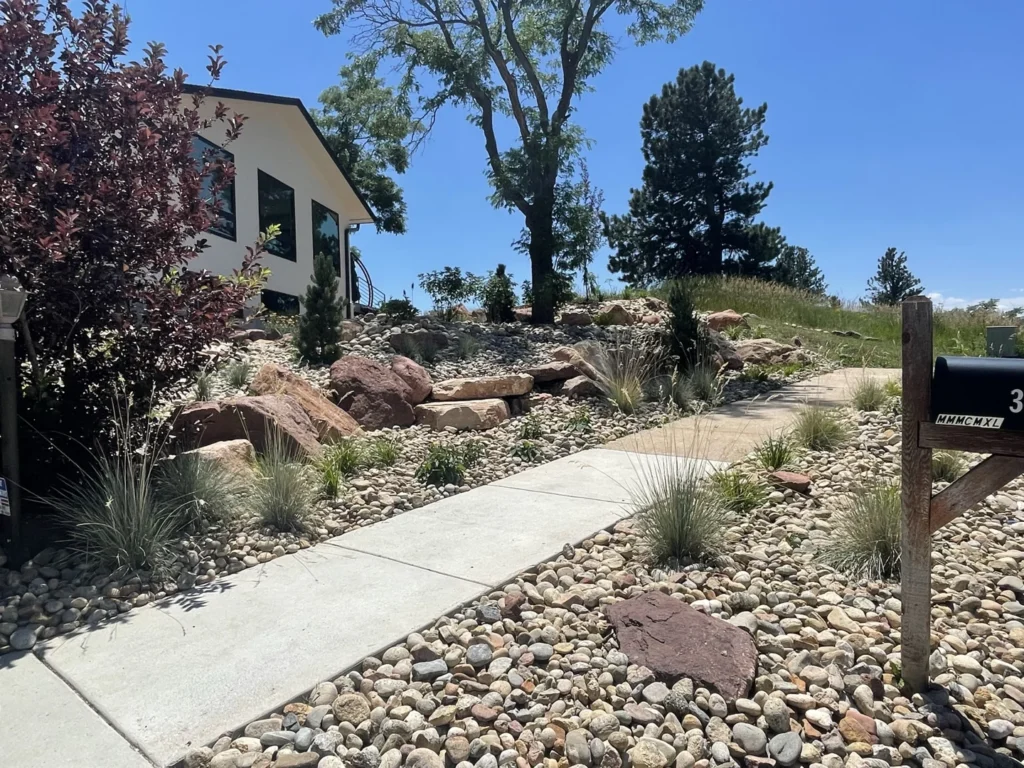
What makes Stone & Leaf Landscaping’s approach different from most homeowners going it alone is not just plant knowledge, it’s the ability to see the yard as a system: soil type, sun exposure, wind patterns, irrigation zones, and plant placement all working together or against each other. When we walk around a site, we’re reading all of those factors at once and connecting them to what will actually work through four seasons, not just what looks good at the nursery in May.
We handle design, irrigation, planting, mulching, and HOA documentation under a single contract with one phone number and one point of accountability. Our 15% do-not-exceed pricing cap means the number we give you at estimate is the number that guides the project, with no runaway costs. Boulder’s climate demands respect and knowledge, not generic landscaping formulas.
Schedule your free seasonal consultation with Hayden and the Stone & Leaf team to align your yard goals with Boulder’s natural rhythms. Call 720-338-3002 or fill out our contact form.
FAQ: Common Boulder Xeriscape Questions
When is the best time to start a xeriscape project in Boulder?
Late August through September or April through mid-May are the two best windows. Fall gives you better root establishment; spring gives you more time for design planning before installation. The earlier you start the conversation with us, the better the outcome, since design work in January sets you up to plant the moment conditions are right.
Will a xeriscape design work for my HOA requirements?
Yes. We provide full CAD drawings and HOA submission support for xeriscaping projects in Boulder, Erie, Broomfield, Lafayette, and surrounding communities. Hayden's architect wife produces formal drawings when required, so HOA approval becomes a step in the process rather than a barrier.
How much water does a mature xeriscape actually use?
A well-designed xeriscape uses roughly 12-15 inches of supplemental irrigation per season, compared to 25-30 inches for traditional turf. That is approximately a 50% reduction, and the gap is even larger during Drought Watch restrictions when turf watering is capped at two days per week.
Can I convert my lawn gradually?
Yes. Phased xeriscape conversion is one of the most practical approaches for homeowners who are not ready to transform the full yard at once. We can design the full plan upfront and execute it in zones over multiple seasons, so each phase ties into the next.
What if my yard is mostly shade?
Boulder has excellent native shade plant options: hellebores, sedges, and columbine all perform well under tree canopy and on north-facing slopes. The right plant list depends on specific shade patterns and soil conditions in your yard, which is exactly what we assess during a free on-site consultation. Shade xeriscaping is genuinely different from sun xeriscaping, and the on-site visit is the only way to get it right.
To conclude, Boulder’s climate demands respect and knowledge, not generic landscaping formulas. If you are ready to build a xeriscaped yard that works year-round, call Stone & Leaf Landscaping at 720-338-3002 or fill out our free consultation form. One owner, one contract, with over 17 years of Front Range experience backing every recommendation in this guide.

Leave a Reply