

Designing for Drought: Practical Boulder Landscaping Strategies to Save Water and Money
Boulder is in a dry year. The City entered a Drought Watch in April and is asking homeowners to voluntarily reduce outdoor water use. Automatic sprinkler systems should stay off until May. Water budgets are being monitored. And if conditions do not improve, mandatory restrictions may follow.
None of this is new to Front Range homeowners. What is new, for many, is the realization that their landscape is working against them. An inefficient irrigation system runs longer to compensate for poor zone design. Sod chosen for appearance rather than drought tolerance demands more water than the yard really needs. And when grading was never properly addressed, irrigation water pools at the surface or runs off the property entirely instead of reaching root zones where it belongs.
At Stone & Leaf Landscaping, we have spent 17 years installing complete outdoor spaces across Boulder, Louisville, Lafayette, Erie, and the surrounding Front Range. The yards that perform best through a Colorado summer, and cost the least to maintain, are almost always the ones where irrigation, sod, and drainage were designed together from the start.
This article walks through each of those systems, explains how they connect, and gives you the practical guidance you need to make smart decisions for your property. If you are ready to talk specifics, we offer a free on-site consultation and would be glad to take a look at what your yard actually needs.
Why Water Management Starts Before You Plant Anything
The most common mistake we see on Front Range properties is sequencing. Homeowners install sod, then call someone about irrigation, then realize years later that drainage was never addressed and water is pooling against the foundation every time it rains.
Getting the sequence right changes everything:
- Drainage and grading come first: How water moves across and through your property determines everything downstream. Front Range soil is clay-heavy, which means it drains slowly, holds water near the surface, and creates runoff conditions that waste irrigation water and stress plant roots.
- Irrigation design comes second: Once you understand how water behaves on the property, you can design a system that works with that reality rather than against it.
- Sod and planting selection come third: Grass variety and plant choices should reflect the water budget, the irrigation system’s capacity, and the long-term maintenance expectations of the homeowner.
When we do a first site visit, the drainage assessment happens before any design conversation. That single step shapes every decision that follows.
Boulder Irrigation: How Smart System Design Cuts Water Bills Without Sacrificing Your Yard
What Boulder's Water Rules Actually Mean for Your System
The City of Boulder uses a water budget system, assigning each account an annual outdoor allotment based on property size and landscaped area. Staying within that budget is not just good practice. Exceeding it means higher tiered rates.
A few rules that every Boulder homeowner with an irrigation system should know:
- Automatic sprinkler systems should not run before May
- From May 1 through September 30, water before 10am or after 6pm to reduce evaporation loss
- Rain sensors and soil moisture sensors can adjust schedules automatically, and the city recommends them
- WaterSense-labeled smart controllers may be eligible for rebates through your water provider
A professionally designed and installed system makes compliance straightforward. It also protects you from the kind of inefficiency that quietly inflates your water bill all summer.
Sprinkler System Design vs. Installation: Why Both Matter
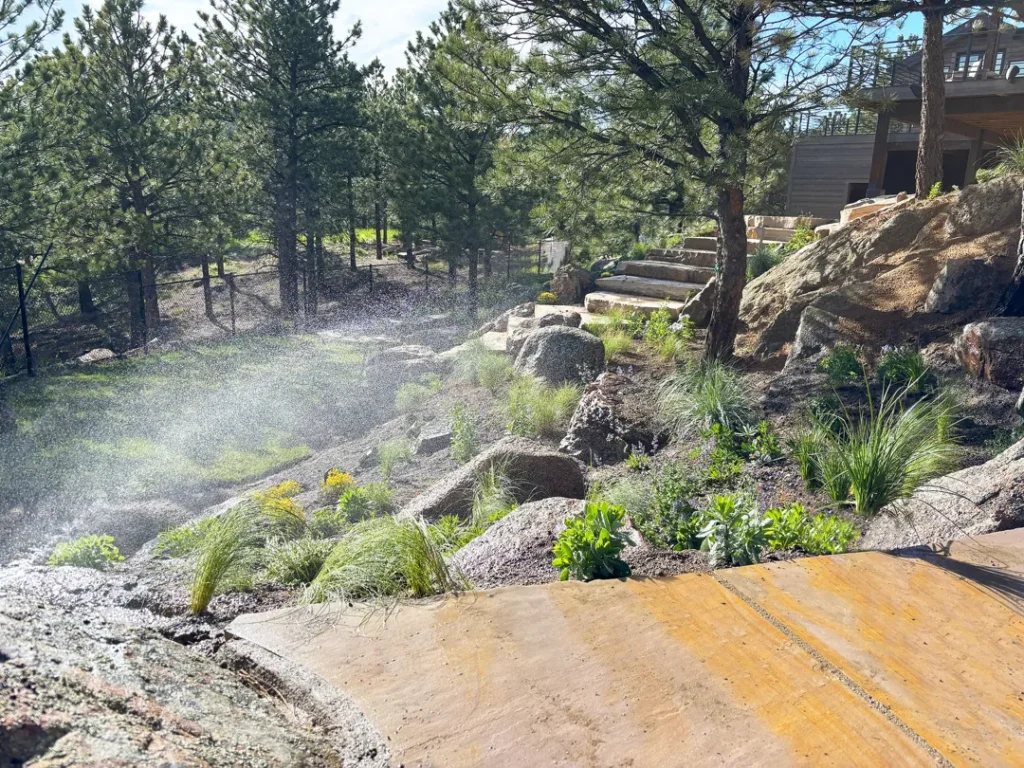
Installation without design is one of the most common sources of irrigation waste we see on Front Range properties. A system can be physically installed correctly and still waste water every cycle because the zone layout does not match the yard’s actual conditions.
Good irrigation design accounts for:
- Zone separation by water need: Sod areas, planting beds, and xeriscape zones have different requirements and should never share a zone
- Head selection and placement: Boulder’s wind, slope variation, and soil conditions affect how water distributes across a zone
- Drip irrigation for beds and xeriscape areas: Targeted delivery at the root zone eliminates the evaporation and overspray that spray heads produce in non-turf areas
- System pressure and flow balance. An unbalanced system runs longer to achieve the same result, wasting water and shortening equipment life
The systems we see fail most often are the ones where installation happened without design thinking behind it. A well-designed system costs less to run over its lifetime than a cheaply built one.
Smart Controllers: When the Technology Is Actually Worth It
Smart irrigation controllers adjust watering schedules based on local weather data, evapotranspiration rates, and soil moisture. In the right situation, they meaningfully reduce water use without any manual adjustment.
The honest assessment: a smart controller on a poorly designed system still wastes water. The technology helps you manage a good system more efficiently. It does not fix bad zone design or incorrect head placement.
When upgrading to a smart controller makes sense, and when a full system assessment is needed first, is a conversation worth having before you invest in new hardware. We are glad to take a look and give you a straight answer.
Boulder Sod Installation: Choosing the Right Grass for a Colorado Yard
The Best Time to Install Sod in Boulder
Timing sod installation correctly in Boulder is one of the most important decisions you will make for its long-term success. The optimal windows are early to mid-fall and spring, when cooler temperatures support root establishment without the stress of summer heat.
Summer installation is high-risk in Colorado. Intense sun, low humidity, and the evaporation rates at our altitude mean sod requires far more irrigation to survive, and even with extra water, heat stress and fungal disease are common outcomes. We have ripped out and replaced summer-installed sod that did not establish properly more times than we can count. The cost of doing it twice is always higher than the cost of waiting for the right window.
Proper site preparation before sod goes down includes:
- Grading for drainage and smooth surface contact
- Soil testing and amendment, particularly important in Boulder’s clay-heavy soils
- Rototilling to loosen compacted ground and promote healthy root penetration
- A final grade check to eliminate low spots where water will collect
Plan on 30 days of consistent, attentive watering during establishment. What that schedule looks like depends on the time of year, the grass variety, and the irrigation system serving that area.
Which Grass Types Actually Perform in Boulder
Not all cool-season grasses perform equally in Front Range conditions, and selecting drought-tolerant grasses is key. Here is how the most common varieties compare:
- Kentucky Bluegrass: Lush, attractive, and popular. Also the thirstiest option. Works well where appearance is the priority and water budget allows for higher demand.
- Tall Fescue: Our most common recommendation for Boulder-area homeowners. Deeper root system, better drought tolerance, and strong performance through a Colorado summer with appropriate irrigation.
- Fine Fescue: Lower water demand, well suited to shaded areas and low-traffic ornamental zones. Not the right choice for high-use family areas.
- Perennial Ryegrass: Fast germination, often used in mixes. Less drought-tolerant than Tall Fescue on its own.
The grass variety should match how the space will actually be used. High-traffic family areas with kids and pets have different needs than a low-use side yard or a front lawn managed primarily for curb appeal.
When Sod Makes Sense and When Xeriscape Is the Smarter Choice
Sod is the right call for high-use areas: backyard play zones, entertaining spaces, pet areas, anywhere the family actually spends time outdoors. The feel and function of a well-established lawn in those spaces is hard to replicate with anything else.
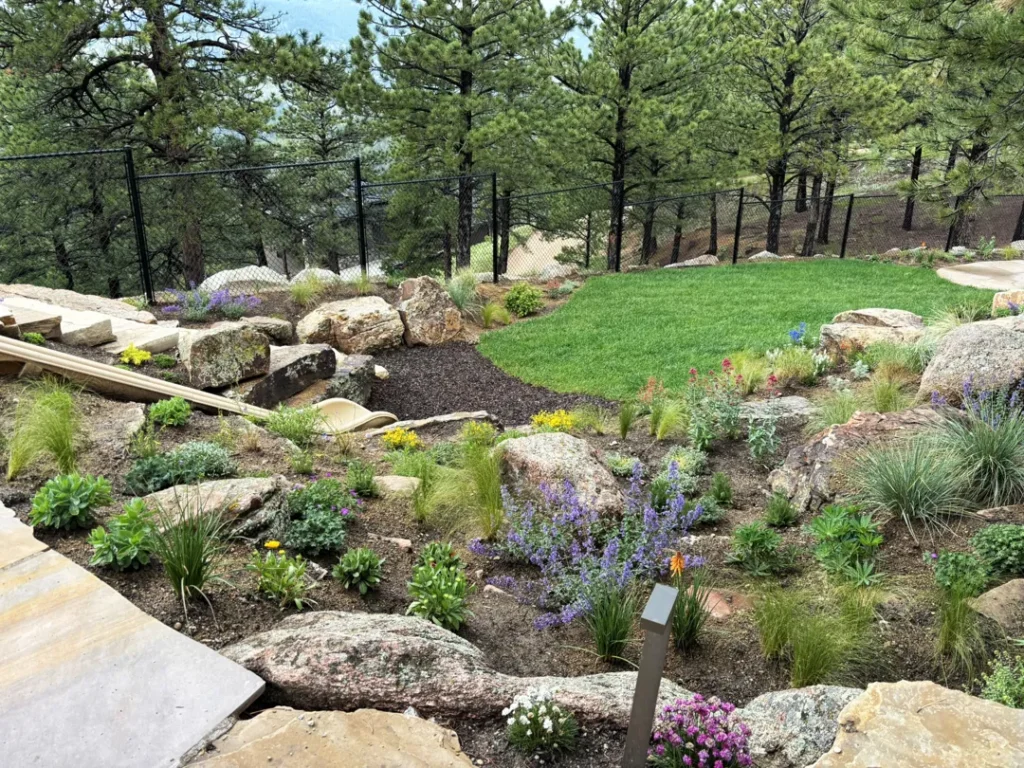
For low-traffic areas, slopes, water-restricted properties, or homeowners whose priority is minimizing long-term maintenance, a water-wise xeriscape approach often delivers better results at lower ongoing cost. The most water-efficient yards we design typically combine both: sod where it gets used, thoughtful xeriscape planting where it does not.
HOA requirements add another layer to this decision. We handle CAD plans and design documentation for HOA submissions in-house, which means the approval process does not become a barrier to doing the right thing for your property. If you are weighing sod versus xeriscape options, ourxeriscape and planting services page can help walk you through what water-wise design looks like in practice.
Boulder Drainage Solutions: Protecting Your Property Before the Next Big Storm
Why Boulder's Soil and Terrain Make Drainage a Priority
Front Range clay soil does not drain the way sandy or loam soil does. Water moves slowly through it, pools near the surface, and follows the path of least resistance, which on many properties means toward the foundation rather than away from it.
Boulder’s terrain adds another variable. Slope variability across the foothills and the surrounding communities creates unpredictable water flow patterns that change with every heavy precipitation event. The 2013 flood was an extreme example, but the drainage issues it exposed were already present on many properties in more ordinary form.
Deferred drainage planning has real consequences: foundation damage, soil erosion, standing water that kills sod and drowns plant roots, and overworked irrigation systems trying to compensate for water that never reaches where it needs to go.
The Main Drainage Solutions We Install
The right drainage solution depends on where the water is coming from, how much of it there is, and what the property’s grading allows. Here is how we think about the options:
- Grading and re-sloping: The starting point for all drainage work. If the ground does not slope away from structures and toward appropriate outlets, no drainage infrastructure downstream will perform reliably.
- French drains: Perforated pipe in a gravel trench, used when subsurface water is the primary issue. Effective for intercepting groundwater before it reaches a foundation or saturates a planted area.
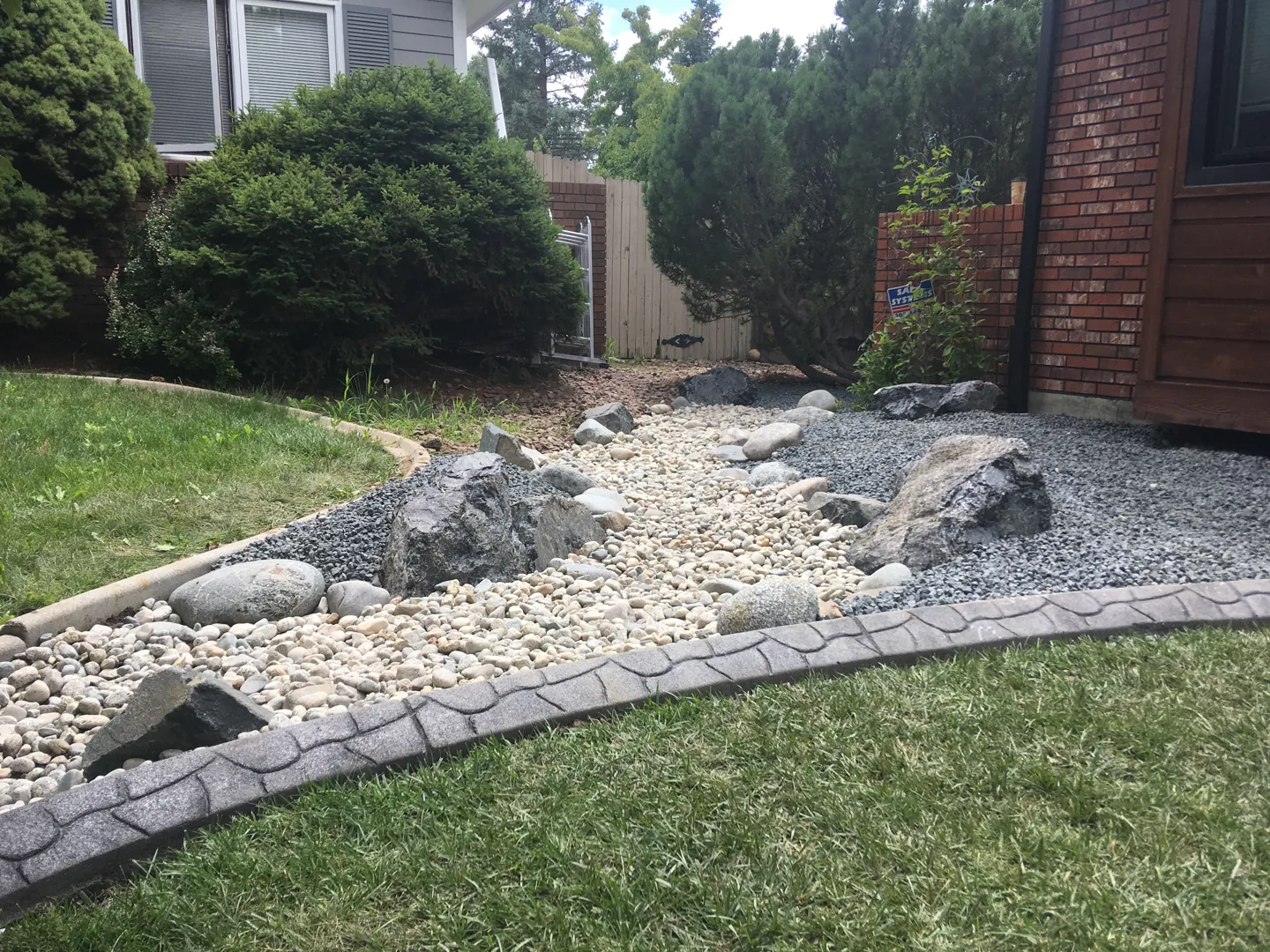
- Dry creek beds: A surface drainage channel with landscape design value. They move water efficiently during rain events and look intentional in the landscape the rest of the time. Well suited to Boulder’s aesthetic and terrain.
- Catch basins and pop-up emitters: The right tool for managing downspout discharge and concentrated surface water in tighter residential spaces.
- Swales: Shallow graded channels that slow and redirect surface runoff. Most applicable on larger properties and sloped lots where water volume is significant.
We always address grading first. Drainage infrastructure installed over an improperly graded site will not perform as designed, regardless of the quality of the components.
How Good Drainage Makes Your Irrigation More Efficient
This is the connection most homeowners do not make until they see it in practice. Water that pools at the surface or runs off the property is water the irrigation system has to replace on the next cycle. A yard with proper grading and drainage retains irrigation water in the root zone, where it actually does something useful.
Waterlogged soil is as damaging to sod as drought stress. Both conditions stress roots, invite disease, and increase long-term maintenance. Addressing drainage at installation is significantly less expensive than retrofitting it after sod and hardscape are already in place.
This is the practical case for the integrated approach. When one contractor manages drainage, irrigation, and sod under a single project plan, each system is designed to support the others. That coordination is difficult to replicate when three separate contractors make three separate decisions on the same property.
Frequently Asked Questions
When is the best time to install a sprinkler system in Boulder?
Spring is the most practical window for most homeowners, ideally before the lawn and planting season gets fully underway. This allows the system to be operational and properly adjusted before peak summer water demand arrives. Fall installation works well too, particularly for homeowners planning sod or landscape work the following spring.
What drainage solution is best for clay soil?
There is rarely a single answer. In most Front Range properties with clay soil, the first step is correcting the grade so water flows away from structures naturally. From there, French drains are effective for subsurface water issues, while dry creek beds and catch basins handle surface runoff. A site assessment will always give you a more accurate answer than a general recommendation.
Can you install irrigation, sod, and drainage under one contract?
Yes, and that is exactly how we prefer to work. Managing all three systems under one contract allows us to sequence and coordinate decisions that affect each other. It also means one point of contact, one schedule, and one budget conversation rather than three.
How long does sod take to establish in Colorado?
Under the right conditions, with proper site preparation and consistent watering, sod typically establishes in 30 days. Cooler fall and spring installations establish more reliably than summer installs. Soil preparation quality and irrigation coverage consistency are the two factors that most affect the timeline.
Do I need a permit for drainage work in Boulder County?
It depends on the scope and location of the work. Boulder County has specific stormwater quality requirements, and larger drainage modifications may require permits or compliance with the Storm Drainage Criteria Manual. We handle this assessment as part of the project planning process and will flag any permit requirements before work begins.

Leave a Reply