
Backyard Gatherings Done Right: Outdoor Living Design Ideas for Boulder Homes
Boulder homeowners spend more time outside than almost anyone. The climate invites it, the scenery demands it, and the culture is built around it. But a lot of backyards in this area are not living up to that potential. Nice-looking patios that bake in the afternoon sun. Fire pits placed too close to the dining table. Spaces that feel great in photos but awkward in person.
The difference between a backyard that becomes the default gathering spot and one that sits mostly empty is rarely about budget. It is almost always about design. Specifically, whether the space was thought through before anything was built.
Stone & Leaf Landscaping has been designing and building outdoor spaces for Boulder-area homeowners since 2008. In that time, the single most consistent lesson is this: homeowners who start with a clear plan end up with spaces their families actually use. Those who start by picking features and figure out the layout later almost always end up making expensive changes down the road.
This guide walks through the core design decisions that turn a backyard into a functional gathering space, from layout and materials to fire features, lighting, and everything Boulder’s climate requires you to get right.
Layout and Flow Come First
Before you choose a paver color or a fire pit style, you need to know how the space is going to work. That means defining zones and thinking through how people will move between them.
A well-designed outdoor entertaining space typically includes three distinct areas:
- A dining zone with enough room for your table, chairs, and comfortable movement around them
- A lounging zone centered on conversation, often anchored by a fire feature
- A cooking or serving zone that keeps the host in the party instead of running back inside
Each zone needs adequate square footage, clear sightlines between areas, and logical transitions. If guests have to squeeze past the grill to get to their seat, or if the conversation zone is so far from the kitchen that the host is always out of earshot, the space will feel frustrating to use no matter how well it is built.
Indoor-outdoor flow matters just as much. Where are the doors or sliders that lead outside? Can someone standing at the kitchen sink see the kids playing on the patio? These connections between interior and exterior living areas determine how often the space actually gets used on a normal Tuesday, not just during a planned gathering.
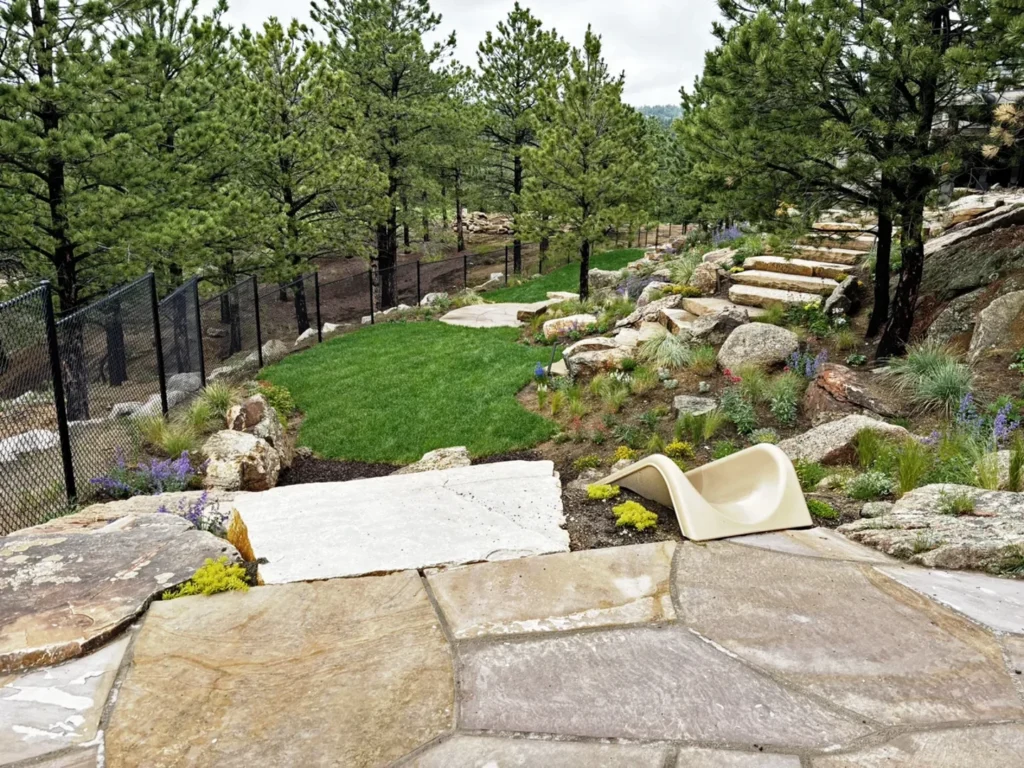
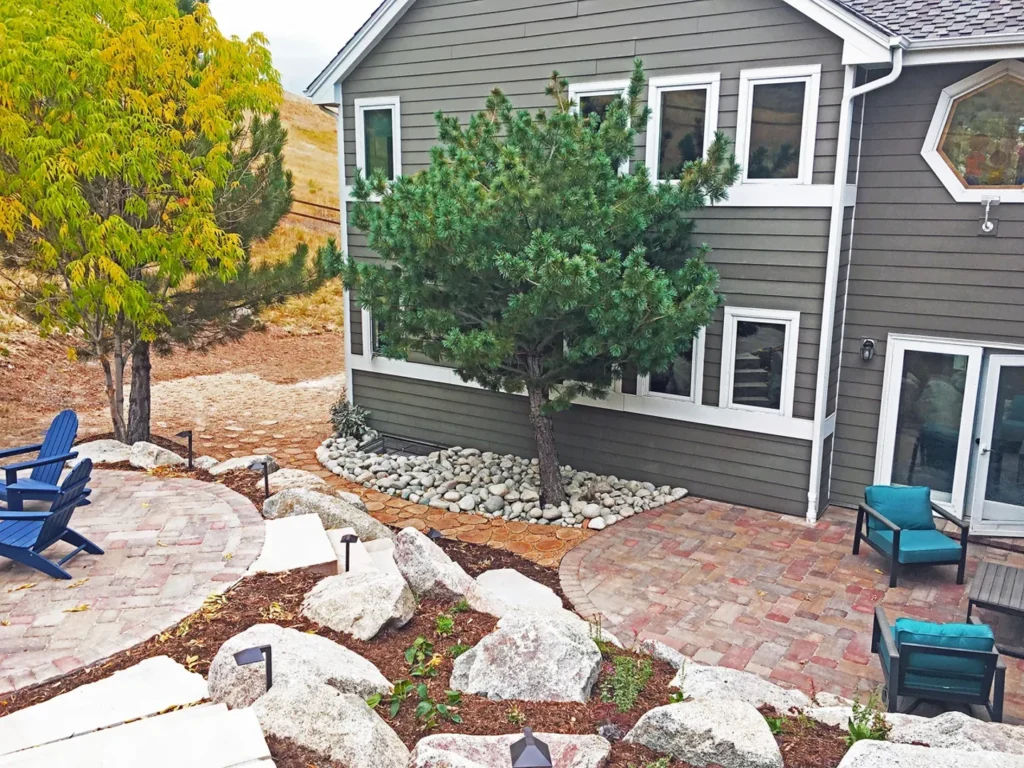
Boulder yards add another layer of complexity. Sloped lots are common across the Front Range, and a slope that gets ignored in the design phase often means a patio that drains poorly, feels uneven, or simply does not get used. Professional drainage and grading, with multi-level designs and retaining walls solve this problem and create natural zone separation in the process.
Hardscape Is the Foundation, Not the Finish Line
Patios, walkways, and retaining walls are the bones of the outdoor space. They determine structure, durability, and the overall architectural feel of the yard. Choosing the right materials is a function of both aesthetics and performance, and in Boulder’s climate, performance is not optional.
The Front Range presents real challenges for hardscape materials: intense high-altitude UV exposure, genuine freeze-thaw cycles through the winter months, and temperature swings that can span 40 degrees in a single day. Materials that perform well in milder climates can crack, shift, or fade here within a few seasons.

What holds up well in this environment:
- Natural flagstone: Ages beautifully, handles freeze-thaw cycles reliably, and complements the Rocky Mountain surroundings in a way that synthetic materials rarely match
- Concrete pavers: Offer flexibility in shape and pattern, and quality pavers rated for freeze-thaw conditions are a durable, lower-maintenance option
- Locally sourced stone: For retaining walls and accent features blends with the natural landscape and tends to outperform imported alternatives over time
Beyond materials, the structural design of hardscape needs to account for drainage. Water that pools on or around a patio causes long-term damage to both the hardscape and the surrounding landscape. We address drainage at the grading stage, before any stone or pavers go down. It is much simpler to solve it then than after the fact.
Shade Makes the Space Usable at 2 PM, Not Just at Sunset
The Colorado sun at altitude is intense. A patio without shade becomes uncomfortable, and often unusable, during peak afternoon hours from late spring through early fall. This is one of the most overlooked design decisions in Boulder outdoor spaces, and one of the most consequential.
Shade is not a furniture problem. It is a design decision that affects structure placement, layout, and how the space connects to the home. Addressing it early means the solution is integrated and intentional. Addressing it later usually means a shade sail bolted to whatever anchor points happen to be available.
Effective shade solutions for Boulder backyards include pergolas over dining or lounging zones, covered structures attached to the home for consistent afternoon protection, and strategic placement of shade trees in areas where the sun’s arc creates the most exposure. The right solution depends on your specific lot, your orientation, and how you use the space. We work through that in the design phase before anything is built.
Fire Features Anchor the Space and Extend the Season
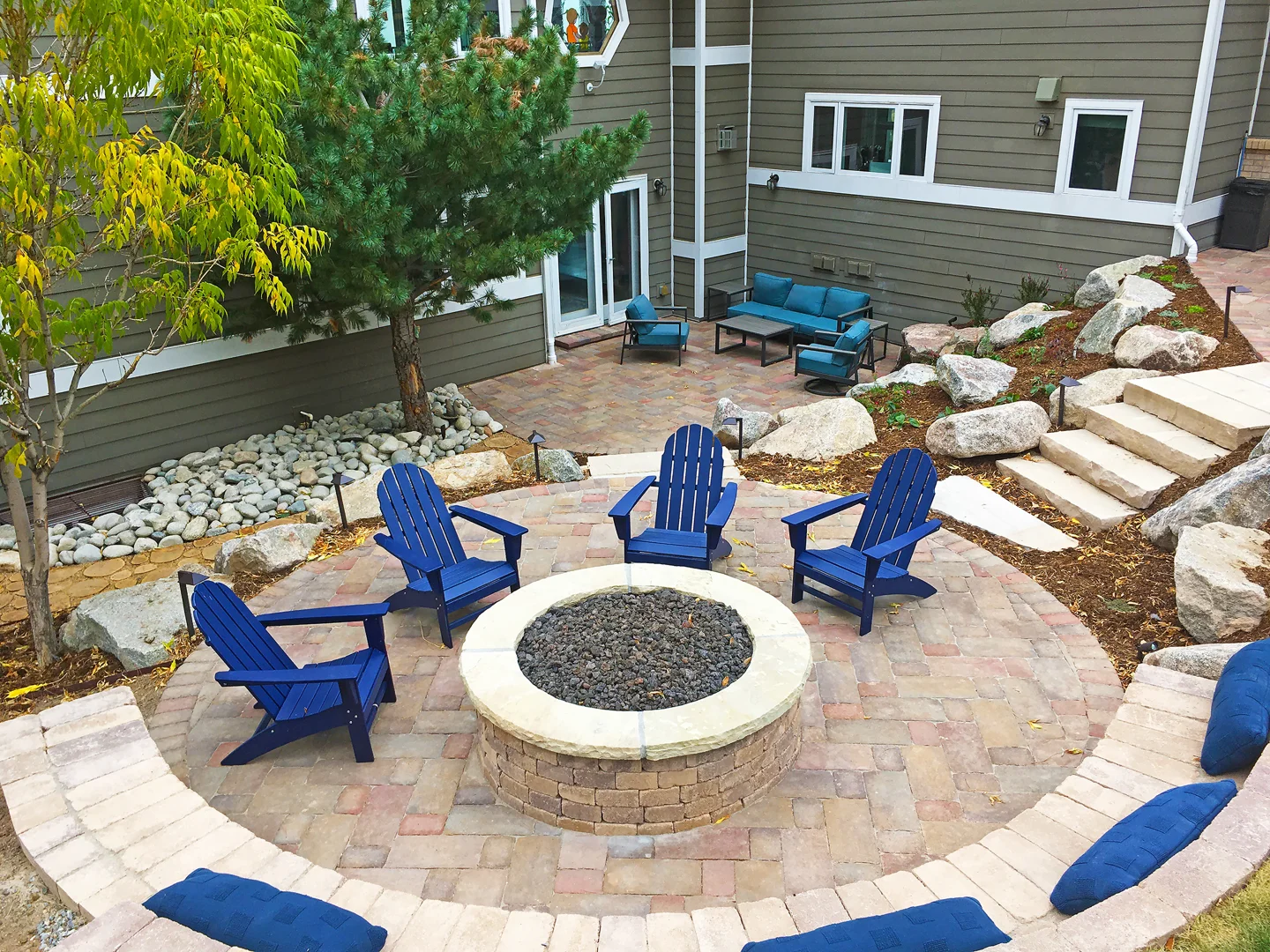
Boulder evenings cool off quickly, even in summer. A well-placed fire feature solves two problems at once: it extends the usable hours of the space into the evening, and it extends the usable months of the space well into spring and fall when the temperature drops after sunset.
Beyond practicality, fire creates something harder to quantify. It gives people a place to look, a reason to stay, and a natural center for conversation. Almost every full backyard project we complete includes some kind of fire feature. Once clients have one, they cannot imagine the space without it. It is what makes a Tuesday evening outside feel like an occasion.
A few design principles that guide fire feature placement:
- Position the fire feature to anchor the lounging zone, not the dining area. Fire and food service compete for space and attention.
- Built-in fire features integrate with hardscape and add lasting value to the property in a way that portable units do not.
- In Boulder’s wildland-urban interface neighborhoods, material choices and setback distances need to reflect fire mitigation guidelines. This is something we account for in the design plan, not something to figure out after the fact.
Outdoor Kitchens and Dining Areas Keep the Host in the Party
The single most common shift we see in how people use their outdoor space after an outdoor kitchen installation is simple: the host stays outside. When the grill, the prep surface, and the serving area are all in the backyard, there is no reason to keep disappearing into the house. The gathering stays together. The energy stays up.
Even modest setups make a significant difference. A built-in grill with a small prep counter and bar seating adjacent to the cooking area changes the flow of a gathering in ways that a freestanding grill on a bare patio cannot. The key is placing the kitchen zone within easy reach of the interior kitchen, close to the dining zone, and far enough from the lounging area that grill smoke and conversation do not compete.
Scale your outdoor kitchen to how you actually entertain. A family that hosts large summer parties has different infrastructure needs than one that mostly does weekend dinners for four. We have that conversation early so the design reflects real use, not an idealized version of it.
Lighting Is What Makes It All Work After Dark
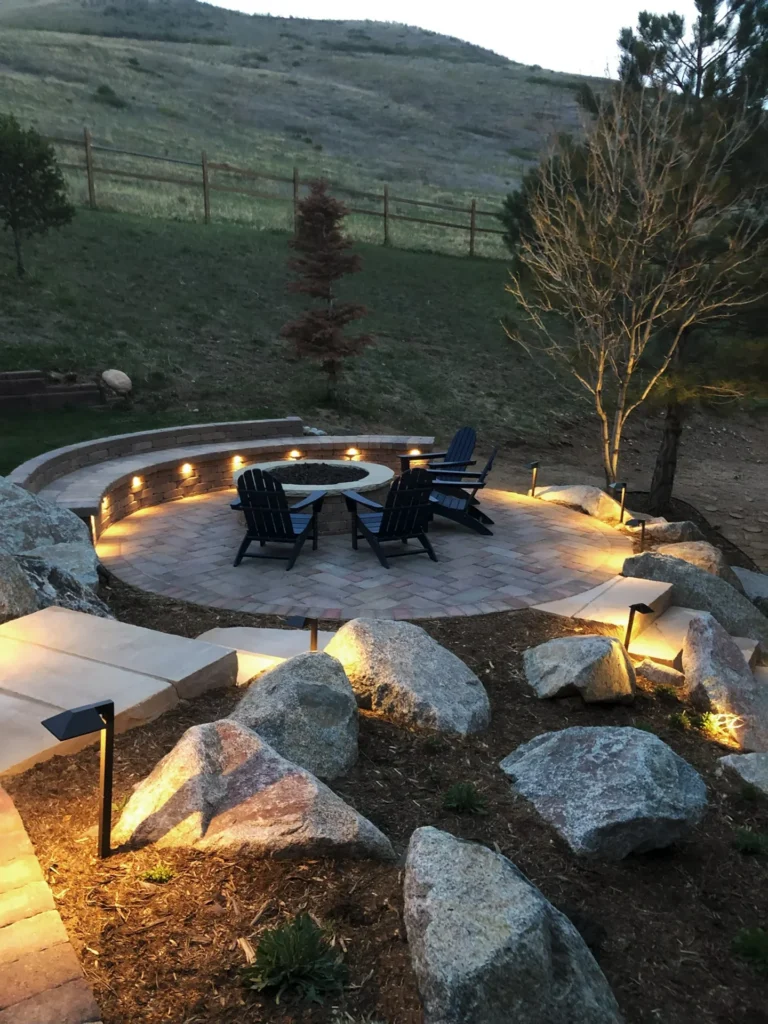
Landscape lighting is the most underestimated element in outdoor space design. A well-lit patio feels completely different from an unlit one, not just visually, but in how long people stay, how the space is perceived after dark, and how safe and inviting it feels for everyday use.
Without lighting, even a beautifully built patio has a hard stop at sunset. With the right lighting plan, the space becomes usable well into the evening across all four seasons.
Lighting serves two distinct roles, and a good design addresses both:
- Functional lighting covers pathways, steps, and transitions between zones. This is safety-focused and ensures the space is easy to navigate after dark.
- Atmospheric lighting defines zones, highlights architectural and planting features, and creates the ambient quality that makes the space feel intentional rather than incidental.
The most important thing to know about landscape lighting is that it needs to be planned during the design phase, not added after installation. Retrofitting lighting into a finished hardscape is more expensive, more disruptive, and almost always less cohesive than integrating it from the start. Conduit placement, power sources, and fixture positioning all need to be part of the original plan.
Low-voltage LED systems are the standard for residential landscape lighting in Boulder. They are energy-efficient, durable in freeze-thaw conditions, and flexible enough to accommodate changes over time.
If lighting is something you want to get right, our Boulder landscape design and lighting services cover concept, specification, and installation as part of the full design-build process.
Designing for Boulder's Climate Is Non-Negotiable
Local climate knowledge is not a differentiator we advertise for its own sake. It is simply what is required to build outdoor spaces that hold up and keep working here. Boulder’s combination of high-altitude UV intensity, rapid temperature swings, genuine freeze-thaw cycles, and periodic high winds creates conditions that affect every material and design decision we make.
A few things that Front Range experience teaches you:
- Drainage is critical and often underestimated: Front Range soils and grading conditions mean water management has to be part of the design, not an afterthought. Poorly drained patios deteriorate faster and create problems for surrounding landscaping.
- Material selection is climate-driven: What looks great and performs well in Denver’s lower elevation does not always translate to Boulder. We source and specify materials that have a proven track record in this specific environment.
- HOA requirements are real: Many neighborhoods across Boulder, Louisville, Lafayette, and Erie have landscape standards that affect design choices and require formal submittals for approval. We produce CAD plans and HOA documentation in-house, which removes a significant friction point for homeowners navigating that process.
- Water-wise design is not just a trend here: Boulder’s relationship with water is practical and regulatory. Designing landscapes that conserve water, support drought-tolerant plantings around hardscape, and comply with local irrigation standards is part of how we approach every project.
We have been working in this climate since 2008. Climate-adapted landscaping, and the details that look simple on a design board, drainage slope, material choice, shade orientation, matter more here than they do in most parts of the country. Getting them right at the design stage is what separates a yard that holds up from one that starts showing problems in year two.
One Plan, One Team, One Project
Piecing together a backyard project across multiple contractors creates problems that are predictable and preventable. Disjointed materials. Miscommunications between trades. Zones that do not connect logically because they were planned separately. Timelines that slip when one contractor is waiting on another.
A design-build approach solves this. One team holds the full vision from concept through installation. Design decisions, material choices, and construction sequencing all happen in coordination rather than in isolation. The result is a space that was conceived as a whole and built as a whole.
At Stone & Leaf Landscaping, we handle design, hardscape, irrigation, fencing, lighting, and planting under a single contract. Hayden is on site every day, not handing off to a crew and checking in by phone. That daily presence is what keeps quality consistent, communication clear, and the project on track from start to finish.
As Hayden puts it: “We’re a full-scale landscaping company that takes care of everything, so you never have to juggle multiple contractors.”
You can learn more about the full range of what we manage by visiting our Boulder landscaping Services & Process Page.
Frequently Asked Questions
How much does a backyard outdoor living project typically cost in Boulder?
Most full outdoor living installations we complete in the Boulder area range from $10,000 to $70,000 or more, depending on scope. A project that includes a patio, fire feature, irrigation, and lighting will land in a different range than one that adds an outdoor kitchen, fencing, and full xeriscape planting. We provide a detailed estimate before any work begins and operate on a time-and-materials basis with a 15% do-not-exceed cap, so there are no budget surprises once a project is underway.
How long does it take to design and build an outdoor entertaining space?
Timeline depends on project scope, but most full installations run several weeks from start to completion. Our current lead time before a project start is generally three to four weeks, though peak summer demand can extend that. We discuss realistic timelines during the initial site visit and build them into the project plan.
Do I need a permit or HOA approval for a patio or outdoor kitchen in Boulder?
It depends on your project scope and your specific neighborhood. Many Boulder-area HOAs require landscape plans and formal submittals before construction begins. Some projects also trigger City of Boulder landscape review requirements. We produce CAD plans and handle HOA documentation in-house, which simplifies that process considerably. We work through permit and HOA requirements as part of the design phase so there are no surprises later.
What is the best patio material for Boulder's climate?
Natural flagstone and quality concrete pavers rated for freeze-thaw conditions both perform well in Boulder. The right choice depends on your aesthetic goals, your budget, and the specific conditions of your lot. Flagstone tends to blend more naturally with the Front Range environment and holds up reliably over time. We walk through material options during the design consultation and explain the trade-offs clearly before anything is specified.
Do you handle the entire project, or do we need to hire separate contractors?
We handle everything under one contract: design, hardscaping, irrigation, fencing, lighting, and planting. You will not need to source or coordinate separate contractors for different phases of the work. That is one of the core reasons clients hire us. One point of contact, one budget conversation, and one team on your property from the first day through the final walkthrough.


Leave a Reply