

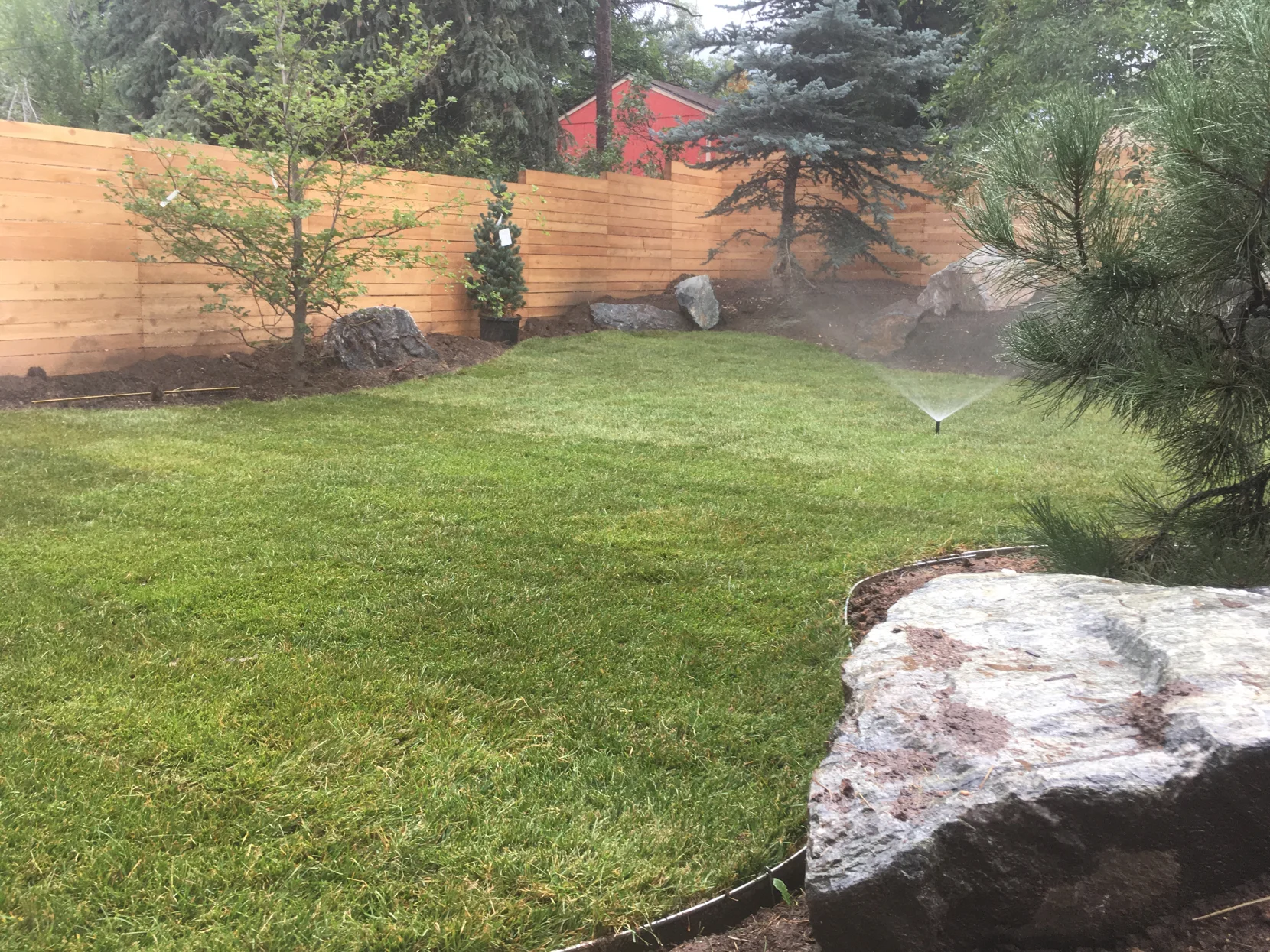
Water-Wise Lawns in Boulder: Choosing the Right Drought-Tolerant Grass
In Boulder, water is always part of the conversation. Between a semi-arid climate, seasonal watering restrictions, rising utility costs, and increasing awareness around sustainability, many homeowners start questioning the traditional lawn model.
They want a yard that looks finished and usable, but without constant watering, mowing, and stress.
That is where water-wise lawns and drought-tolerant grass come in. But choosing the right option in Boulder is not as simple as picking a product labeled “low water” and hoping for the best.
A successful water-wise lawn depends on three things working together:
- Choosing a grass that actually performs in the Front Range climate
- Installing it correctly, with proper soil prep, grading, and irrigation
- Setting realistic expectations around appearance, water use, and maintenance
This guide breaks down what drought-tolerant grass really means in Boulder, when sod installation or sod replacement makes sense, and how to avoid the most common mistakes our team at Stone & Leaf Landscaping sees on local properties.
What “Water-Wise” Really Means for Lawns in Boulder
One of the biggest misconceptions around drought-tolerant grass is the idea that it requires no water at all. In reality, water-wise lawns are about using water more efficiently, not eliminating irrigation entirely.
In Boulder, every lawn needs water during:
- Initial establishment
- Extended heat waves
- Periods of low natural rainfall
What changes with a water-wise lawn is how much water is needed and how often.
Compared to traditional bluegrass lawns, drought-tolerant and water-wise options can:
- Use less water once established
- Recover better after dry periods
- Require less frequent mowing and fertilizing
Where problems arise is when expectations are not aligned. Some drought-tolerant grasses will not stay bright green all summer. Some will slow growth or go partially dormant during peak heat. That trade-off is normal and, when expected, usually acceptable.
The goal is not perfection. The goal is a lawn that works with Boulder’s climate instead of fighting it.
Why Grass Choice Matters More in the Front Range Than Most Homeowners Realize
A lot of lawn advice online is written for very different climates. Boulder brings a unique mix of conditions that make grass selection especially important.
A few local realities that matter:
- Higher elevation and stronger sun exposure
- Clay-heavy soils that compact easily
- Big temperature swings between day and night
- Water restrictions that limit daily irrigation
Grasses that thrive in other regions may struggle here without extra water or constant intervention. That is why simply choosing a grass labeled “drought-tolerant” is not enough.
In the Front Range, the right grass choice depends on:
- Sun exposure
- Soil condition
- Irrigation coverage
- How the yard is actually used
When those factors are ignored, even good grass can fail.
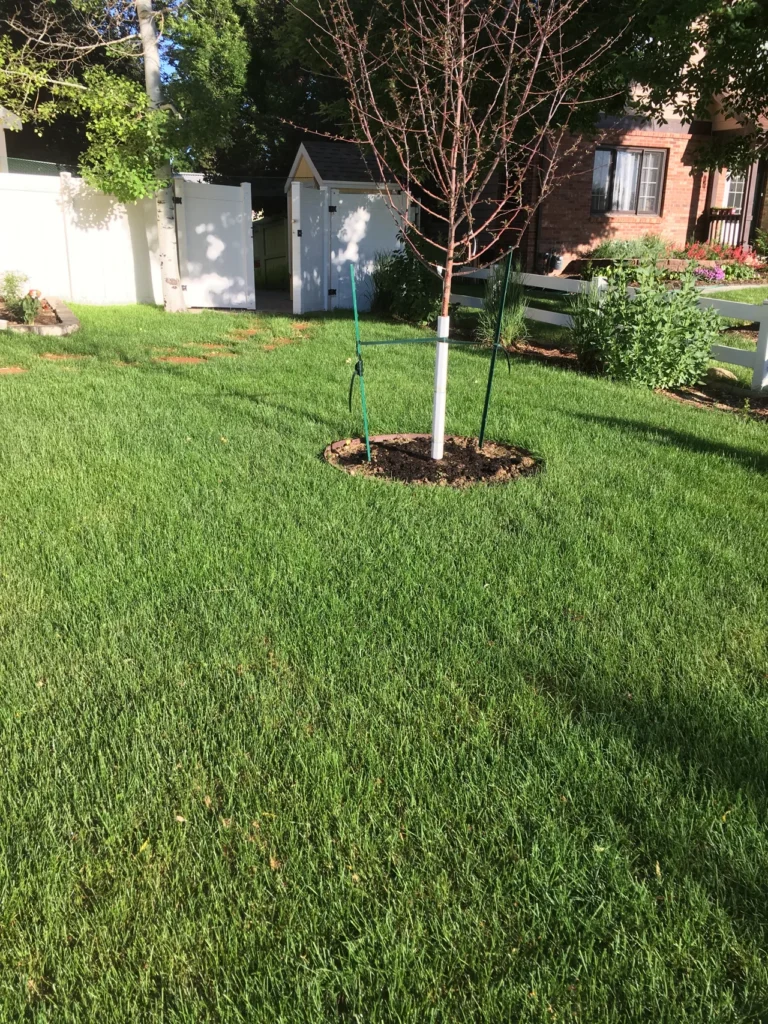
Drought-Tolerant Grass Options That Actually Make Sense in Boulder
Instead of overwhelming homeowners with national “top 10” lists, it is more helpful to focus on the types of turf that Boulder homeowners realistically consider.
Most drought-tolerant lawn conversations here fall into a few categories.
Improved cool-season grasses
These are often chosen for family yards because they:
- Stay greener in spring and fall
- Handle moderate foot traffic
- Use less water than traditional bluegrass
They still require summer irrigation, but far less than older turf varieties.
Warm-season grasses
These grasses:
- Handle heat well
- Use less water during peak summer
- Often go dormant and brown outside the warm season
They can be a good fit in the right setting, but are not always ideal for every neighborhood or HOA.
Low-water and native turf alternatives
These options:
- Use very little water once established
- Are best for low-traffic or decorative areas
- Require clear expectations around appearance and use
Each option comes with trade-offs. The best choice depends less on marketing claims and more on how the lawn fits into your overall landscape.
Matching the Right Grass to How You Actually Use Your Yard
The most successful water-wise lawns start with an honest look at how the yard is used.
Here are a few common scenarios.
Active family yards
If kids, dogs, and regular use are part of daily life:
- Durability matters more than maximum water savings
- Some irrigation will always be required
- A moderate water-wise option is often the best balance
Low-use or decorative spaces
If the lawn is mostly visual:
- Lower-water options make more sense
- Seasonal dormancy is often acceptable
- Maintenance demands can be minimal
Sun-heavy properties
- Drought-tolerant grasses perform best here
- Water savings are easier to achieve
Partially shaded yards
- Fewer drought-tolerant options thrive
- Expectations around water use should be adjusted
Trying to force a low-water solution into a high-use space usually leads to frustration. Choosing a grass that matches real-world use leads to long-term success.
When Boulder Sod Installation Makes Sense, and When It Does Not
Boulder sod installation can be a great solution, but it is not always the right one.
Sod installation makes sense when:
- You want immediate results
- You need to meet HOA or new-build deadlines
- Erosion control or usability is urgent
- The site has been properly prepared
Sod may not be ideal when:
- Soil and grading issues have not been addressed
- Irrigation coverage is inconsistent
- The lawn area is very small or rarely used
- Expectations around water use are unrealistic
Sod provides instant results, but it also highlights mistakes quickly. Proper prep is what determines whether sod thrives or struggles.
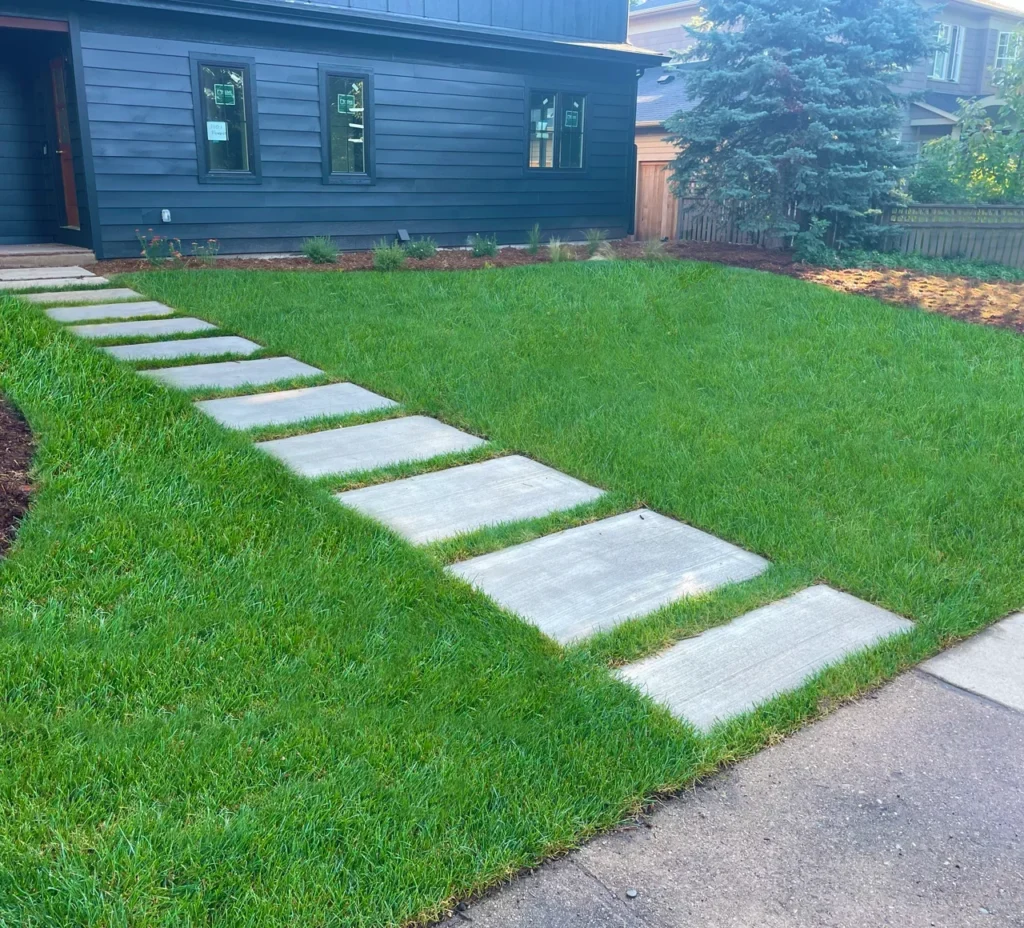
What to Expect With Boulder Sod Replacement Projects
Sod replacement is often the right move when an existing lawn has become more work than it is worth.
Common reasons homeowners replace sod include:
- Chronic dry patches or dead areas
- Weed-dominated turf
- Drainage problems
- High water bills with poor results
A typical Boulder sod replacement includes:
- Removing existing turf
- Correcting grading or drainage issues
- Amending compacted soil
- Installing new sod
- Establishment watering and early care
When done correctly, sod replacement resets the lawn and allows for a more water-wise approach moving forward.
Why Soil Prep and Irrigation Matter More Than the Grass Itself
One of the most important lessons we see on Boulder properties is this.
Grass choice matters, but soil prep and irrigation matter more.
On the Front Range, common issues include:
- Compacted clay that restricts root growth
- Poor drainage that keeps roots shallow
- Irrigation systems that miss sections of lawn
Without proper preparation, even drought-tolerant sod will struggle. With proper prep, grass develops deeper roots, requires less frequent watering, and handles stress far better.
This is why water-wise lawns are rarely just about turf. They are about the entire system working together.
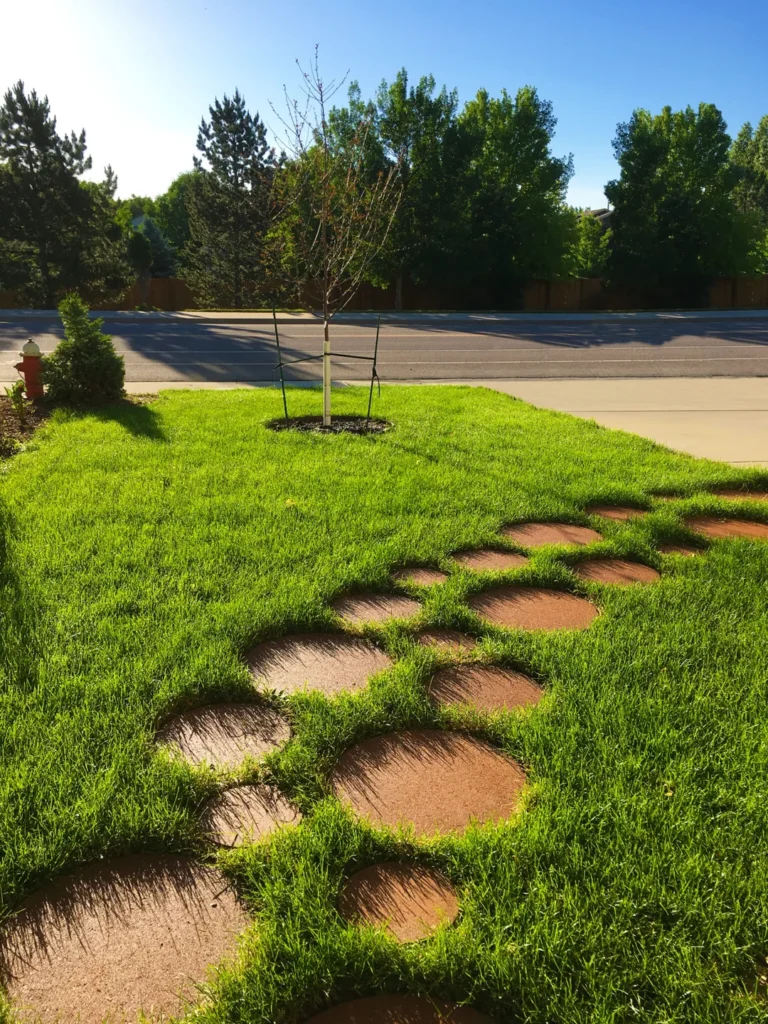
Best Timing for Drought-Tolerant Sod Installation in Boulder
Timing plays a major role in how much water new sod needs.
Spring installs
- Benefit from cooler temperatures
- Require careful watering as summer approaches
Early fall installs
- Often the best window
- Warm soil supports root growth
- Cooler air reduces stress and water demand
Mid-summer installs
- Possible, but riskier
- Require close monitoring and consistent irrigation
Planning installation around the calendar can significantly reduce water use and improve long-term results.
Common Mistakes We See With “Water-Wise” Lawns
Most lawn problems come from a few recurring mistakes.
Some of the most common:
- Choosing grass based on labels instead of site conditions
- Skipping soil prep to save money upfront
- Overwatering early, then cutting back too fast
- Expecting instant low maintenance
Avoiding these mistakes often makes a bigger difference than choosing a specific grass variety.
Is a Water-Wise Lawn Right for Your Property
Before committing to a water-wise lawn, it helps to step back and assess fit.
Ask yourself:
- How much do we actually use this lawn
- Are we comfortable with some seasonal color change
- Is reducing water use a priority or a bonus
- Are we willing to invest in proper prep and irrigation
If the answers line up, a water-wise lawn can be a great solution. If not, alternatives like xeriscape or mixed planting may be a better fit.
Working With a Boulder Sod and Lawn Installation Team That Gets It Right
Choosing the right Boulder landscaper is just as important as choosing the right grass.
Look for a team that:
- Understands Boulder soil and water realities
- Handles irrigation, drainage, and sod together
- Communicates clearly about trade-offs
- Takes a consultative approach rather than pushing a single solution
A water-wise lawn succeeds when planning, installation, and follow-through are aligned from day one.
Ready to Plan a Water-Wise Lawn That Actually Works in Boulder
If you are exploring drought-tolerant grass, Boulder sod installation, or sod replacement, the next step is not guessing. It is getting clarity.
At Stone & Leaf Landscaping, we design and install water-wise lawns as part of complete outdoor systems. That means soil prep, grading, irrigation, drainage, and sod all work together, managed under one contract with clear communication and transparent pricing.
You can:
- Learn more about our approach and recent projects at https://stoneandleaf.us/
- Explore our Boulder irrigation, sod, and drainage services at https://stoneandleaf.us/boulder-irrigation-sod-drainage/
- Schedule a conversation or request a site visit through our Contact Us page at https://stoneandleaf.us/contact-us/
A water-wise lawn should reduce stress, not create it. When the right decisions are made upfront, you end up with a yard that looks good, uses less water, and fits how you actually live in Boulder.
Frequently Asked Questions About Water-Wise Lawns in Boulder
What is the best drought-tolerant grass for Boulder?
There is no single “best” drought-tolerant grass for every Boulder property. The right choice depends on sun exposure, soil conditions, irrigation coverage, and how the lawn will be used. In general, Boulder homeowners do best with grass options that balance reduced water use with durability, rather than chasing the lowest-water option possible. During an on-site visit, we help narrow choices based on how your yard actually functions.
Does drought-tolerant grass stay green all summer?
Not always, and that is an important expectation to set early. Many drought-tolerant grasses stay green longer than traditional turf but may slow growth or lose some color during extreme heat or dry periods. In Boulder’s climate, some seasonal color change is normal for water-wise lawns and does not mean the grass is unhealthy.
How much water does a water-wise lawn really need?
All lawns need water, especially during establishment. A water-wise lawn typically uses:
- More water during the first few weeks after installation
- Less frequent, deeper watering once roots are established
- Less overall water than traditional bluegrass lawns over the course of a season
- The exact amount depends on grass type, soil condition, sun exposure, and irrigation efficiency.
Is sod or seed better for a water-wise lawn in Boulder?
Sod and seed can both work, but they serve different goals. Sod provides immediate results and is often preferred for Boulder sod replacement or HOA-driven timelines. Seed can be more cost-effective but takes longer to establish and requires careful watering early on. The right choice depends on timing, budget, and how quickly you need the lawn usable.
When is the best time for Boulder sod installation?
Early fall is often the best time for sod installation in Boulder because warm soil and cooler air temperatures help roots establish with less stress. Spring is also a good option, though new sod will need careful watering as summer approaches. Mid-summer installs are possible but require closer attention to irrigation and care.
Why does sod fail even when it is labeled drought-tolerant?
Most sod failures are not caused by the grass itself. Common issues include:
- Poor soil preparation or compacted clay
- Inadequate grading or drainage
- Uneven or inefficient irrigation coverage
- Improper watering during establishment
- Drought-tolerant sod still needs the right conditions to succeed, especially in Boulder’s climate.
Can I replace part of my lawn with drought-tolerant sod and keep the rest?
Yes. Many homeowners choose a hybrid approach, keeping lawn where it is most functional and converting other areas to more water-wise planting or xeriscape. This often delivers the best balance between usability, appearance, and water savings.
Do water-wise lawns work with HOAs in Boulder?
They often do, but HOA requirements vary. Some associations have specific rules around turf type, coverage, and appearance. Planning ahead and choosing appropriate grass options makes approval much easier, especially when irrigation and drainage are addressed correctly from the start.
How do I know if my yard is a good candidate for a water-wise lawn?
A good candidate usually has:
- Adequate sun exposure for turf
- Realistic expectations about appearance
- Willingness to invest in proper soil prep and irrigation
- A goal of reducing water use and maintenance over time
- If those boxes are checked, a water-wise lawn is often a strong fit.
Leave a Reply