

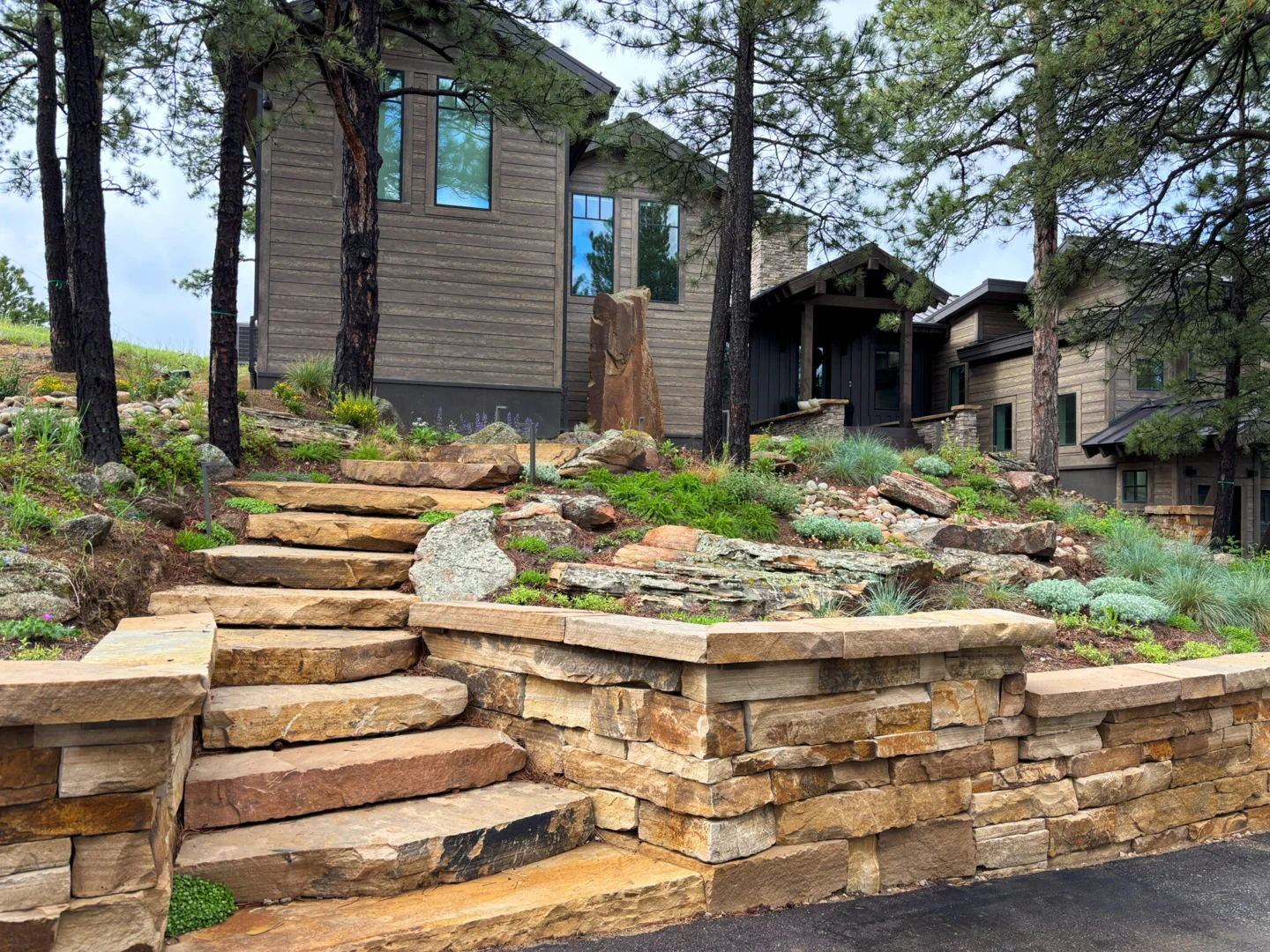
Water-Wise Watering: How Smart Irrigation Makes Xeriscaping Actually Work in Boulder
Boulder xeriscape irrigation means using drip systems, smart controllers, and hydrozoned watering schedules to deliver water precisely where plants need it. Xeriscaping doesn’t mean no watering. During establishment and Boulder’s dry summers, the right irrigation system is what separates a thriving xeriscape design from one that struggles.
Drought-tolerant plants without an irrigation plan rarely survive their first Boulder summer. In xeriscape design, the irrigation system isn’t an afterthought, it’s what makes the whole thing work.
Let’s discuss a water-wise irrigation plan designed for your yard and Boulder’s climate.
The Biggest Misconception About Boulder Xeriscape
The most common thing homeowners say is some version of: “I want xeriscape because then I won’t have to water.” It’s an understandable assumption, but it leads to real problems.
What Xeriscape Actually Means
Xeriscape means water-wise, not water-free. The difference matters on the Front Range, where July and August bring hot, dry conditions with low and unpredictable rainfall.
Key facts about the establishment phase:
- Drought-tolerant species still need supplemental irrigation during their first one to two growing seasons.
- Root systems require time to develop before plants can access soil moisture independently.
- Without consistent water delivery during that window, plants that would thrive long-term simply don’t make it.
The City of Boulder Context
The City of Boulder’s outdoor watering guidance reflects this reality. The city addresses irrigation timing and conservation practices specifically because outdoor water use is a genuine concern here, not a theoretical one. Following that guidance while still supporting new plantings through establishment requires a thoughtfully designed system, not just a hope that rain will show up.
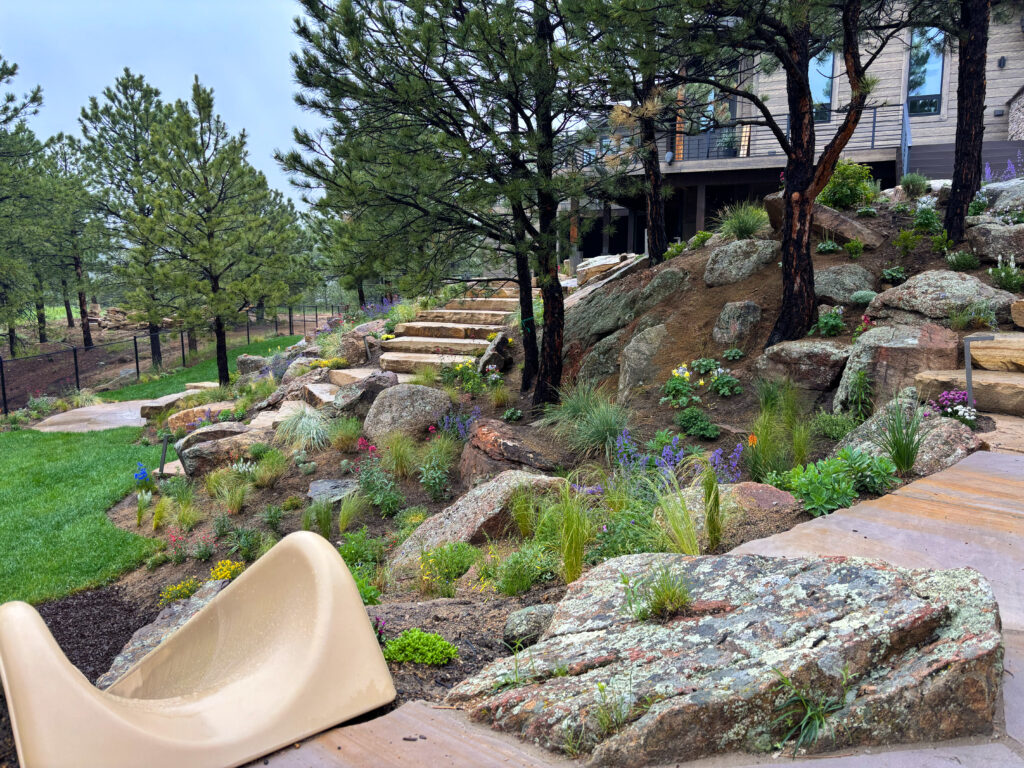
Once a xeriscape is established, water use drops substantially compared to conventional turf. That’s the real payoff. But getting there requires a well-designed irrigation system supporting the plants through those early seasons. We cover the full picture of common misunderstandings in our article on xeriscape myths Boulder homeowners should know.
Why Drip Irrigation Is the Right System for Boulder Garden Design
Drip is the right answer for how xeriscape plantings actually work and for Boulder’s specific climate conditions.
Water Delivered to the Root Zone
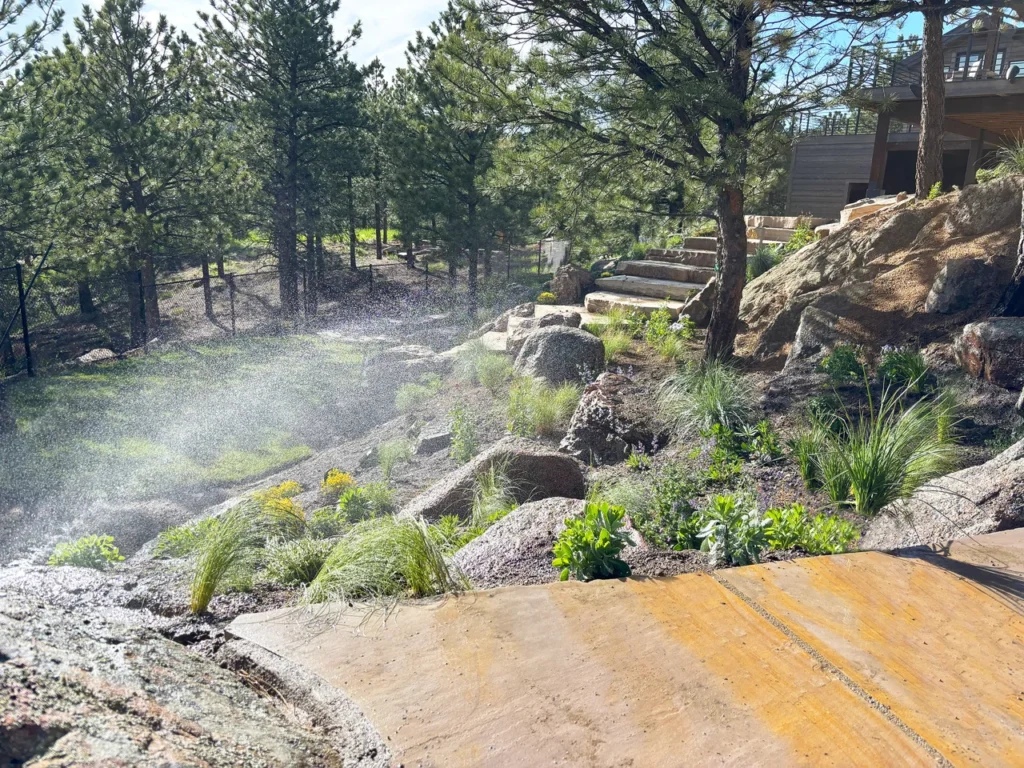
Spray heads broadcast water into the air and across a broad surface area. In Boulder’s dry, often windy conditions, a significant portion of that water evaporates before it reaches the soil. Drip irrigation delivers water directly to the root zone, where plants can actually access it. That single change eliminates one of the biggest sources of waste in a conventional system.
Reduced Disease Pressure
Many drought-tolerant species that perform well in Boulder garden design don’t like wet foliage. Overhead watering keeps leaves damp, which creates conditions where fungal disease can take hold. Drip systems water the soil, not the plant, which removes that problem entirely.
Per-Plant Calibration
A spray zone applies roughly the same amount of water to everything in its path. A drip system allows emitter output to be selected for each plant individually. A newly planted shrub gets more; an established ornamental grass gets less. The system matches what the plants actually need rather than applying a uniform rate.
No Waste onto Hardscape or Mulch
Spray overspray onto patios, walkways, and mulched areas doesn’t help plants and adds up in water waste over a season. Drip lines run to planting zones only, so every gallon goes where it’s intended.
How a Drip System Is Actually Built
A drip system isn’t a single product. It’s an assembly of components that need to be sized and placed correctly for the yard they’re serving.
Core Components
- Mainline tubing: runs from the controller valve and carries water from the source through the planting area.
- Lateral lines: branch off the mainline and run through planting beds, connecting to individual emitters at each plant location.
- Emitter types: matched to plant size and type: button emitters for smaller perennials, inline drip tape for massed groundcover areas, and micro-bubblers for larger shrubs and trees that need slower, deeper delivery.
- Pressure regulators: keep output consistent across slopes and uneven terrain common in Boulder-area yards, preventing some emitters from over-delivering while others barely drip.
- Filter assemblies: protect the small emitter openings from debris in the water supply.
These components together produce a system that can be calibrated, adjusted, and winterized properly, which matters a great deal once Boulder’s freeze-thaw cycles arrive each fall.
Hydrozoning: Grouping Plants by Water Need, Not Just Location
Hydrozoning is the planning practice of grouping plants with similar water requirements onto the same irrigation zone, so the system can deliver the right amount to each group rather than running one schedule across the entire yard.
Why Zone Separation Matters
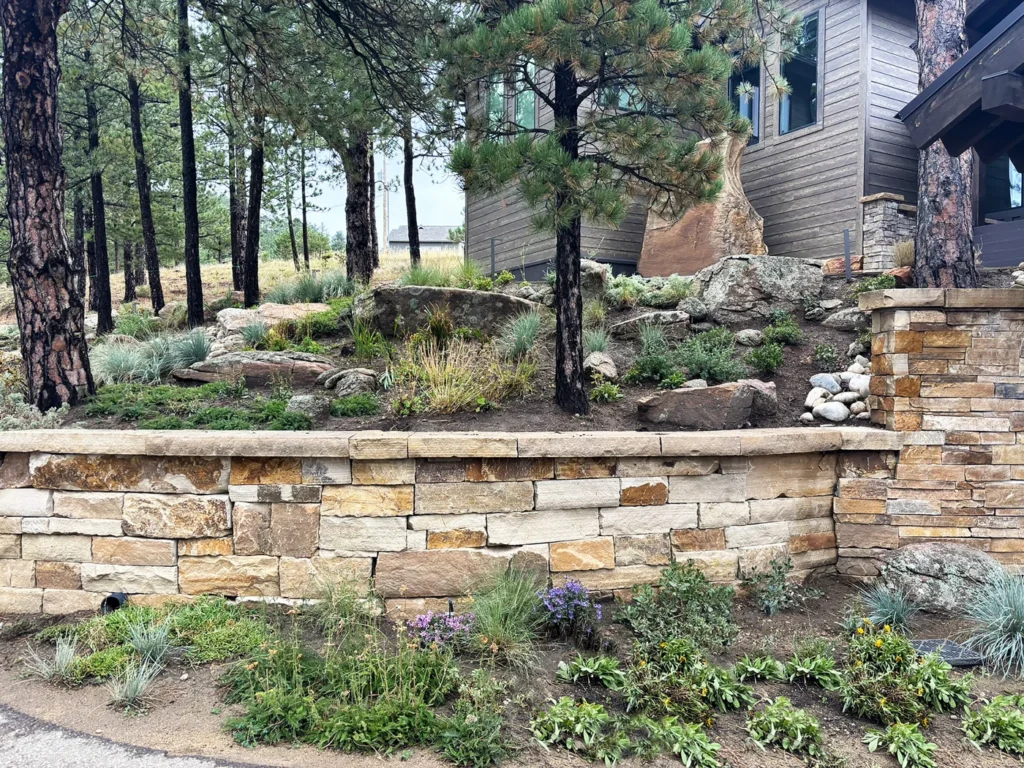
Most Boulder yard design projects include multiple planting areas with genuinely different needs. Consider a typical Front Range yard:
- Native grasses and low-water perennials near the street might need watering once every ten days during establishment.
- Flowering shrubs near the foundation, which get some reflected heat from the house, may need slightly more frequent delivery.
- A small turf area for kids has different requirements entirely.
Running all of those on a single zone and single schedule means some plants get too much water and some get too little.
The Cost of Poor Hydrozoning
- Over-watered drought-tolerant species frequently develop shallow root systems because they never need to reach deeper for moisture.
- Under-watered plants near a turf zone get shorted because the schedule was built around grass, not perennials.
Why It Has to Be a Design Decision
Hydrozoning is a Boulder xeriscaping design decision made during the planning phase. Effectively retrofitting it onto an existing system requires remapping zones and often replacing valve hardware. When the hydrozoning plan is built before a single line is installed, the irrigation system supports the planting design rather than fighting it.
Our xeriscape seasonal planting guide covers timing considerations for Front Range species that inform how we set up watering zones through the growing season.
Smart Controllers: Irrigation That Adapts to Boulder's Climate
A conventional irrigation timer runs on a fixed schedule, regardless of what the weather does. That’s a problem on the Front Range, where conditions shift fast.
How Smart Controllers Work
A conventional irrigation timer runs on a fixed schedule, regardless of what the weather does. That’s a problem on the Front Range, where conditions shift fast.
Smart controllers use local weather data, including temperature, evapotranspiration rates, and rainfall detection, to automatically adjust watering schedules based on actual conditions.
- On a week when Boulder gets afternoon thunderstorms, the controller dials back runtime.
- During a dry stretch in September when daytime temperatures stay high and there’s been no precipitation, it compensates.
- The system responds to the yard’s actual water needs rather than repeating the same schedule from May through October.
Soil Moisture Sensors
Soil moisture sensors add a second input layer. A sensor reads whether the soil already has adequate moisture before a scheduled cycle runs. If it does, the cycle skips. That prevents irrigation from running immediately after a meaningful rain event, which is one of the most common ways homeowners waste water with conventional timers.
Together, smart controllers and soil moisture sensors are a significant part of how clients achieve up to 50% less water use compared to conventional spray-head systems. The plant selection matters, but without the right delivery system and scheduling intelligence behind it, even a well-chosen xeriscape planting will use more water than it needs. Our Boulder landscaping water conservation guide covers the City of Boulder’s outdoor watering guidance and how to align irrigation scheduling with local requirements.
Programming the Establishment Phase
New xeriscape plantings, even species selected specifically for drought tolerance, need more frequent irrigation during their first one to two growing seasons. Root systems need time to develop before they can access soil moisture independently.
What Goes Wrong Without a Phased Schedule
A single schedule set at installation and left unchanged is a consistent failure point. The schedule that makes sense for a newly planted garden in June is too frequent for the same garden the following July, when root systems have extended and the plants can handle longer intervals between waterings.
How to Approach It
- Program controllers with the establishment timeline in mind: a more frequent initial schedule, followed by deliberate step-downs as the first and second growing seasons progress.
- Watch for plants showing stress during a dry period, they may need a temporary schedule adjustment.
- Plants that look waterlogged need less frequent watering, not more.
- The goal is an irrigation system that supports establishment actively rather than running unchanged until the plants either adapt or don’t.
Our xeriscape seasonal planting guide covers Front Range species timing in more detail and pairs well with the establishment scheduling approach used on every install.
What Water Savings Actually Look Like in a Boulder Xeriscape
The “up to 50% less water” figure is real, but it comes from several changes working together rather than any single factor.
Where the Savings Come From
- Turf replacement:is the biggest contributor. Conventional bluegrass lawns require consistent irrigation through Boulder’s dry summers. A xeriscape planting zone, even during establishment, needs far less, and that turf replacement alone accounts for a meaningful reduction in overall outdoor water use.
- Switching from spray-head to drip delivery: captures most of the remaining savings for planted areas. The elimination of evaporation loss and overspray waste adds up over a full season of watering.
- Smart controller scheduling:layers on additional reduction by matching runtime to actual weather conditions rather than running a fixed calendar.
- Mulch applied to planting beds: reduces evaporation from the soil surface between watering cycles, extending the intervals the system needs to run.
Setting Realistic Expectations
For xeriscape landscaping in Boulder, the starting point matters. A yard currently running full spray-head irrigation over a conventional lawn will see the largest percentage reduction after conversion. A yard that’s already partially converted will see a smaller percentage gain, though still a meaningful one. The City of Boulder’s outdoor watering guidance adds practical relevance: homeowners face real outdoor water requirements from May 1 through September 30, and a well-designed xeriscape irrigation system keeps you comfortably within those requirements.
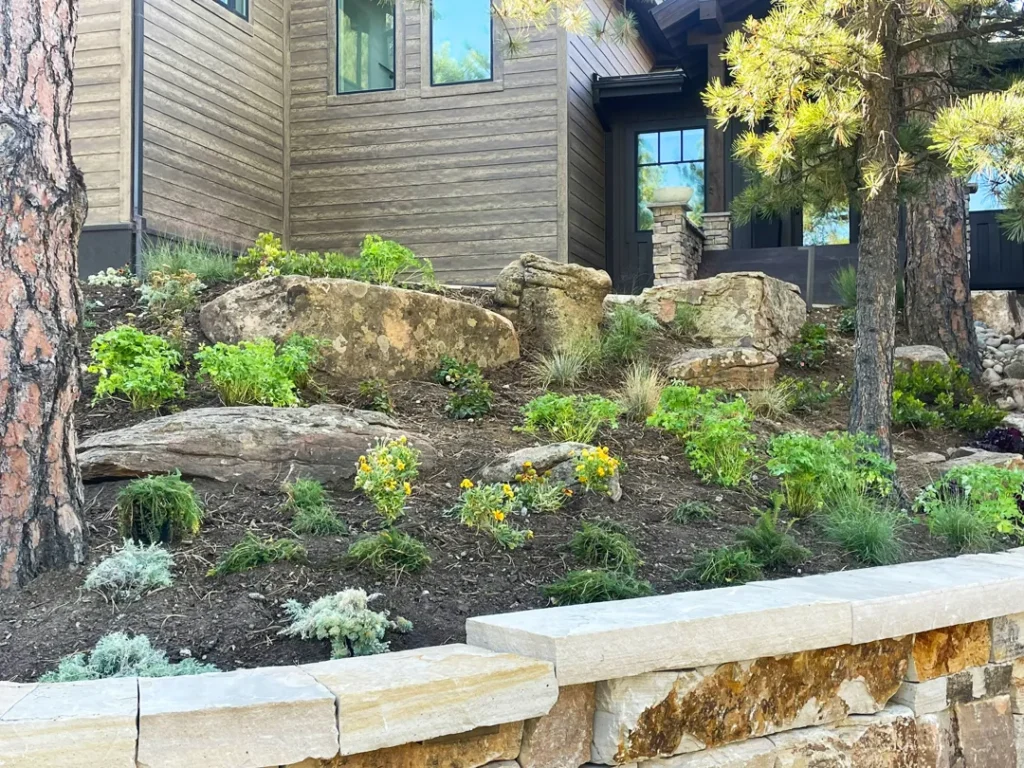
One Contract for Design, Irrigation, and Planting: Why That Matters
The problem with hiring separate vendors for design, irrigation, and planting is a coordination problem that almost always lands on the homeowner.
The Separate-Vendor Problem
An irrigation contractor rough-ins a system based on a design plan. Then the planting contractor arrives, looks at the layout, and decides a shrub works better two feet to the left. The emitter placed for that shrub is now in the wrong location, but the irrigation contractor has moved to another job. The homeowner is left managing the conversation between two contractors who have no particular reason to coordinate with each other.
How One Contract Changes Things
As a Boulder xeriscape company that handles all three disciplines in-house, that problem is solved at the contract level. The person who designed the hydrozoning plan is the same person on-site when the drip lines are being placed and when the planting layout gets finalized. If something shifts during installation, the adjustment happens the same day, by the same crew, without a phone tag chain.
Pricing Transparency on Complex Scopes
Our pricing model removes the budget anxiety that often makes homeowners reluctant to commit to a full-scope project. Time-and-materials billing with a clearly stated 15% do-not-exceed cap means the estimate given at the design phase is the number you can plan around. Irrigation and xeriscape projects regularly surface surprises: existing irrigation lines in unexpected locations, soil conditions that require additional drainage work, grade changes that affect drip pressure calculations. The do-not-exceed cap means those discoveries don’t turn into budget shocks. Projects typically fall in the $10,000 to $70,000 and above range depending on scope.
Curious what a complete xeriscape and irrigation project looks like for a Boulder yard? Explore our xeriscape and planting services or take a look at irrigation installations we’ve completed.
HOA Compliance and CAD Plans for Boulder-Area Xeriscape Projects
Many neighborhoods across Boulder, Louisville, Lafayette, Broomfield, and Erie have HOA landscape requirements that go beyond general design preferences. Some require specific plant coverage percentages. Others have rules around irrigation system specifications or the types of materials allowed in planting beds.
In-House CAD Capability
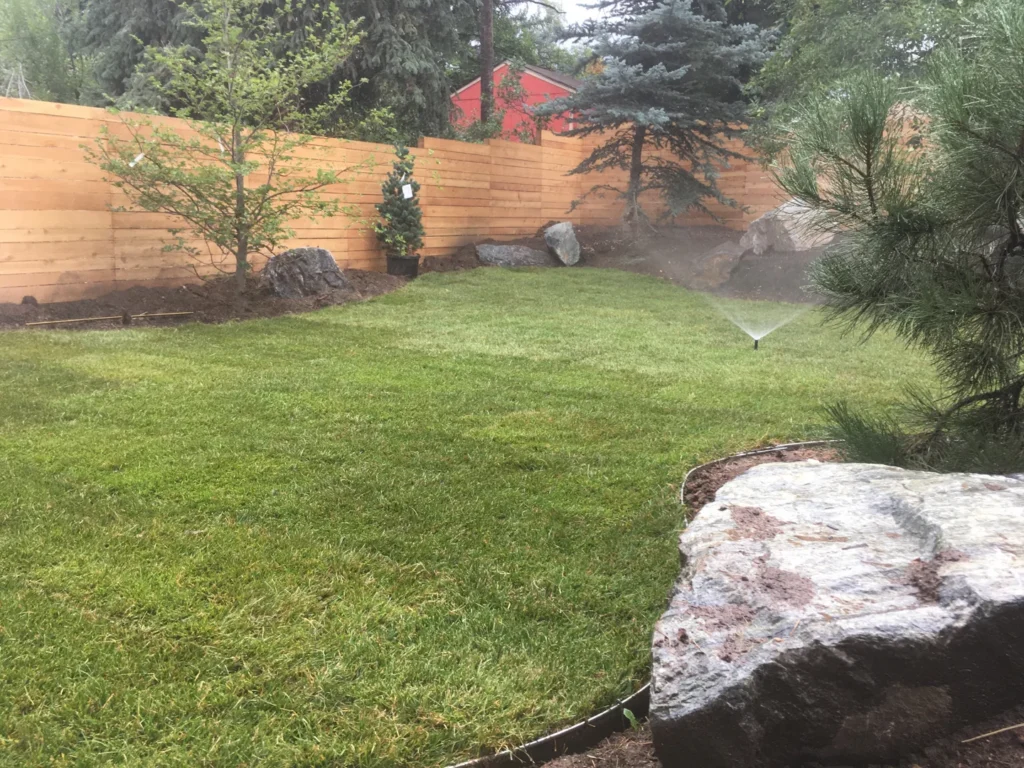
When a project requires HOA approval, submittal drawings are handled in-house. Hayden’s wife is a licensed architect who produces full CAD drawings when a project requires formal documentation for HOA review. That means the drawings are produced as part of the same contract scope, not farmed out to a third party or delayed while waiting on an external designer.
For homeowners in HOA-governed neighborhoods, this is a meaningful time-saver. The submittal package goes in with the right level of detail the first time, which keeps the project on schedule. Our landscape design and HOA planning support page covers what that process looks like in more detail.
What to Expect: Stone & Leaf Landscaping’s Xeriscape Irrigation Process
Here’s how a xeriscape irrigation project moves from first conversation to a functioning system supporting established plants.
Step 1: Free On-Site Consultation
Hayden brings a tape measure, walks the yard, and talks through what you want to use the space for and what your water priorities are. That site walk produces a realistic ballpark budget before any formal design work begins.
Step 2: Design Phase
This covers developing the hydrozoning plan, mapping the drip layout across planting zones, selecting the controller, and producing CAD drawings if the project requires HOA submittal.
- Zone sequencing is informed by Front Range species timing from our xeriscape seasonal planting guide.
- Hydrozoning decisions are finalized before a single line is placed.
- CAD drawings are produced in-house when HOA submittal is required.
Step 3: Installation
A single crew handles irrigation rough-in, planting layout, drip line placement, and mulching as an integrated sequence. Because the work proceeds from the same plan across all three scopes, installation stays coordinated without the gaps that come from separate contractors handing off work.
Step 4: Controller Programming
Once the system is in the ground, the controller is programmed with an establishment schedule and you’re walked through how it’s set and how to adjust it seasonally.
Step 5: Winterization
Before the first winter, system winterization is handled as part of the project scope. Boulder’s freeze-thaw cycles require an annual blowout and proper shutoff to protect the lines and emitters from damage. That winterization is included, not a separate service call you have to remember to arrange.
Our boutique crew of six people, with Hayden on-site daily, means each phase of the project gets sustained attention rather than a rushed one-day installation followed by a handoff to a different team. You can explore more about our irrigation system installation and drainage services to get a fuller picture of how we approach the technical side.
Frequently Asked Questions About Xeriscape Irrigation in Boulder
Do xeriscapes need an irrigation system?
Yes, particularly during the establishment phase. Most Front Range drought-tolerant species need consistent supplemental irrigation for the first one to two growing seasons while root systems develop. A well-designed drip system is also what makes the up-to-50% water reduction achievable in practice. Skipping irrigation entirely typically means losing a significant portion of new plantings before they establish.
How long does it take for a xeriscape to stop needing regular irrigation?
For most Front Range drought-tolerant species, expect one to two full growing seasons before you can meaningfully reduce watering frequency. Deep-rooted shrubs and small trees typically establish faster than shallow-rooted perennials. Soil conditions, sun exposure, and summer temperatures in any given year all affect the timeline. Controllers are set with this progression in mind and the schedule is adjusted as plantings mature.
Can I convert my existing sprinkler system to drip irrigation?
In most cases, yes. The existing valve infrastructure can usually be retained, but the zones often need to be remapped to align with a hydrozoning layout rather than the geographic proximity groupings most conventional systems use. Running drip off zones designed for spray heads also requires pressure regulation adjustments. Existing systems are assessed during the on-site consultation to identify what can be adapted and what needs replacement.
What happens to a xeriscape irrigation system in winter?
Boulder's freeze cycles require annual winterization, typically a compressed-air blowout that clears water from the lines and emitters before temperatures drop below freezing. Leaving water in the system through a freeze cycle causes damage to emitters, fittings, and sometimes mainline tubing. Winterization is included in the project scope so it's handled correctly the first fall rather than discovered as a problem the following spring.
How much does xeriscape irrigation installation cost in Boulder?
Projects typically fall in the $10,000 to $70,000 and above range, depending on yard size, existing irrigation infrastructure, scope of planting, and whether the project requires hardscape or drainage work alongside the xeriscape installation. Time-and-materials billing with a 15% do-not-exceed cap is used on every estimate, so the number given at the design phase is the number you can plan your budget around.
Ready to understand what your yard needs? Schedule a free consultation with Stone & Leaf Landscaping. There’s no obligation, just honest guidance on budget and timeline.
Ready to See What a Water-Wise Irrigation Plan Looks Like for Your Yard?
A free on-site consultation is how this starts. Hayden will come to your yard, walk the site, and give you a realistic budget conversation before any commitment is made. No design fees for the initial visit, no pressure to move forward on the spot.
Stone & Leaf has held Thumbtack Top Pro status in 2017, 2018, 2019, and 2020, and carries a 4.7-star rating across over 90 reviews. Those reviews consistently reference communication, owner follow-through, and projects delivered on budget. We serve Boulder, Louisville, Lafayette, Erie, Broomfield, Longmont and more communities across the Front Range.
To book your consultation or request a quote, visit ourcontact page or call 720-338-3002. You can also learn more about the full scope of what we offer through our Boulder xeriscape and planting services page.
Stone & Leaf Landscaping
225 32nd St, Boulder, CO 80305
720-338-3002
info@stoneandleaf.us
When you’re ready to talk about what a water-wise yard looks like for your specific property, reach out and we’ll get a site visit on the calendar.
Leave a Reply