


The Complete Guide to Landscape Maintenance in Boulder’s Changing Seasons
Landscape maintenance in Boulder means planning around roughly 17 inches of annual precipitation, clay-heavy soils, and four distinct seasons that hit harder than nearly anywhere else in the country. This guide brought to you by the Boulder landscaping experts at Stone & Leaf Landscaping covers what to do each season, when to do it, and why it matters for your yard.
What Boulder Homeowners Need to Know Before We Start
What works in the Midwest or for a Southern California yard will leave your Boulder landscape struggling by August. Once you understand Colorado’s Front Range’s seasonal patterns, the maintenance calendar becomes manageable. Our landscape design-build professionals have been working in Boulder-area yards since 2008, and the framework below reflects what actually holds up here.

Why Boulder's Climate Makes Landscape Maintenance Different
Boulder’s elevation, wind exposure, and soil combine in ways that catch homeowners off guard, especially those coming from more forgiving climates.

Climate and Soil Factors:
Boulder’s semi-arid climate averages only about 17 inches of annual precipitation, yet clay-heavy soils don’t absorb water efficiently, so runoff is common even when rain is scarce. Many plants that perform fine in milder climates won’t survive a Front Range winter without protection. That combination makes drainage and grading decisions as important as plant selection. Learn why Boulder’s unique climate requires professional drainage & grading.
Weather Challenges:
Chinook winds hit in late fall and midwinter, pulling moisture out of plants before the ground has thawed enough to replace it. Late spring frosts can arrive well into May, which means one warm week can fool you into planting too early. Freeze-thaw cycles through October and November can crack PVC irrigation lines, heave pavers, and damage mortar joints in retaining walls, often without any visible sign until spring reveals the full picture. The City of Boulder’s water use guidelines reflect these realities, emphasizing native and drought-tolerant species over traditional turf for these reasons.
Spring Landscape Maintenance in Boulder: March Through May
Winter reveals every design or installation decision that didn’t account for Front Range conditions. Basic cleanup can start in late March to mid-April once the soil is workable, but new plantings and sprinkler, sod, and drainage work should wait until after the last hard frost, which in Boulder often falls in mid-May.
Spring Task Sequence:
- Assess frost heave and soil compaction in clay areas first, since clay expands and contracts dramatically through winter and you may find irrigation lines shifted, pavers lifted, or drainage channels redirected.
- Cut back ornamental grasses and perennials once you see new growth at the base, not before. Cutting too early on a late-frost year sets plants back significantly.
- Pull early weeds while the soil is still moist. Weed suppression before the soil warms is far easier than dealing with established root systems in June.
- Turn existing mulch to break crusted surfaces, then add fresh material once frost risk has passed.
- Delay planting native and drought-tolerant species until late May. A mid-May snowstorm is not unusual in Boulder, and new plantings need protection if that happens. Our article on seasonal planting and garden maintenance tips covers timing for Front Range species in more detail.
If your yard is in Erie, Broomfield, or a newer Lafayette development, spring is also when HOA landscaping deadlines surface. Knowing your completion window before March is worth the planning effort.
Irrigation Startup: What to Check Before You Turn the System On
Boulder’s freeze-thaw cycles regularly crack heads, split fittings, and leave standing water in valve boxes that goes unnoticed until pressure reveals the damage. Before pressurizing anything, work through these steps with an irrigation startup and drainage inspection in mind.
Steps for Irrigation Startup:
- Inspect all heads for winter cracking. A cracked head looks fine until water hits it.
- Check every valve box for standing water or root intrusion.
- Walk each zone individually before pressurizing the full system. Isolating zones lets you catch a broken fitting before it floods a bed or saturates a foundation area.
- Test the backflow prevention device, required by the City of Boulder. If it shows any winter damage, address it before opening the main supply.
- Adjust controller run times for spring conditions. Soil holds more moisture in April and May than in July, and running summer schedules in spring leads to overwatering and root problems in clay.
A poorly winterized system almost always shows damage in spring, and that damage is preventable with proper fall shutoff, which we’ll cover in the fall section below.
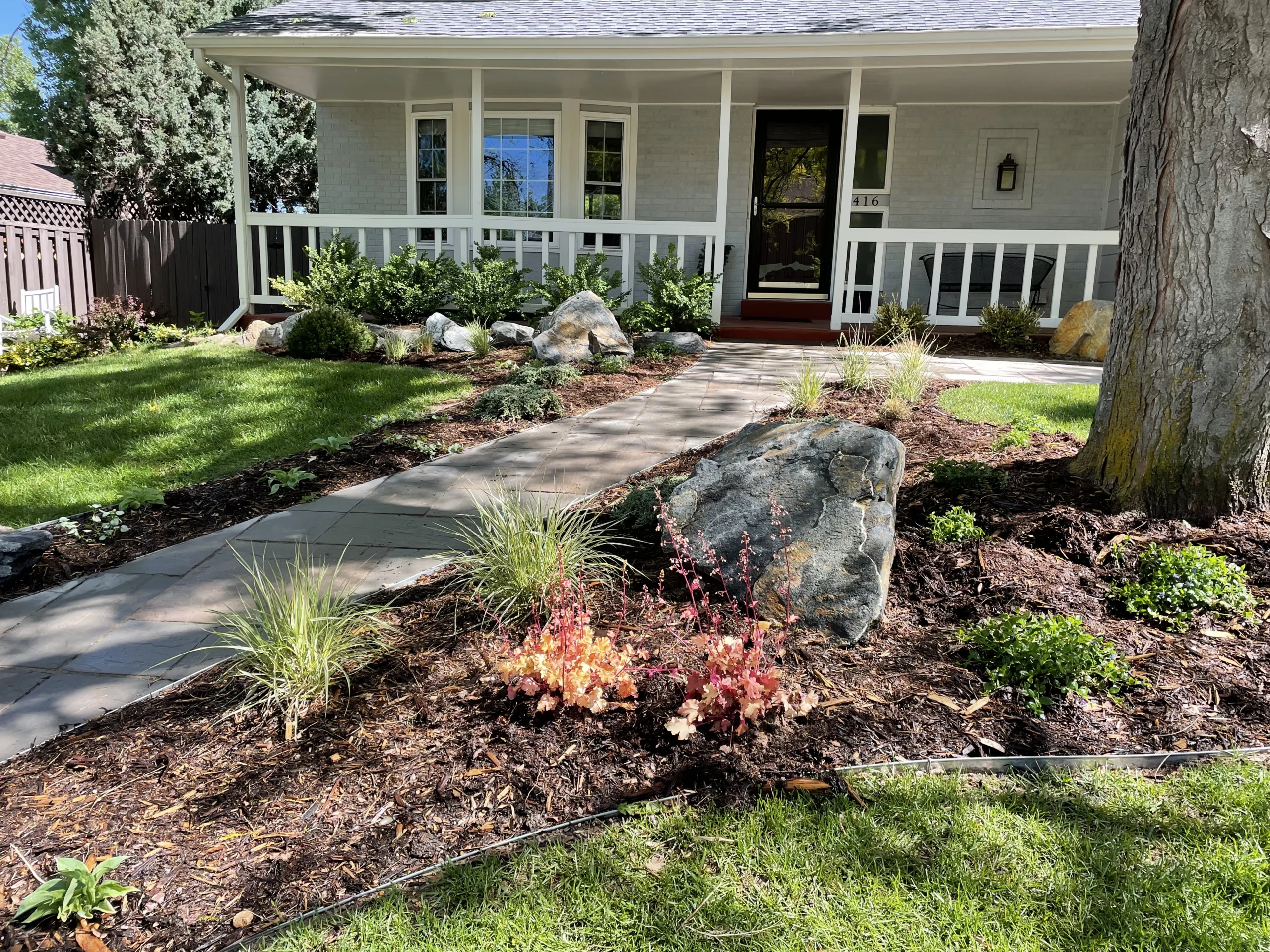
Summer Boulder Landscaping: Keeping Your Yard Healthy in the Heat
Boulder summers push average highs regularly past 90 degrees in July, and that heat combines with low humidity and intense sun to stress landscapes not designed for it. Summer maintenance centers on one thing: water management done correctly, not just generously.
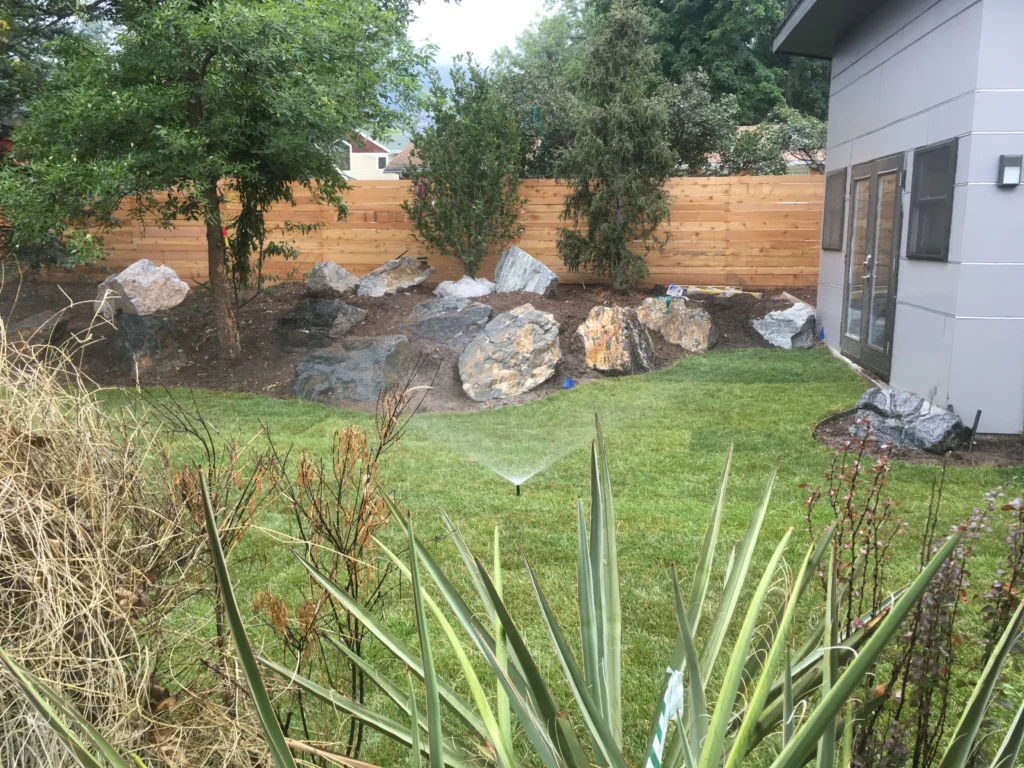
Summer Task Sequence:
- Maintain 2 to 3 inches of mulch in all planted beds to retain moisture, moderate soil temperature, and reduce weed pressure. Letting mulch drop below an inch is a setup for drought stress and weed problems that compound through August.
- Deadhead and lightly prune through June and July to extend bloom cycles. Manage weeds before seed set, since weeds that go to seed in August become next spring’s problem at scale.
- Inspect drip emitters and soaker lines every few weeks. Boulder’s water is mineral-heavy, and emitter clogging causes localized drought stress without any visible cause until plants start showing it.
A well-designed Boulder landscaping strategy to save water and money cuts water consumption by up to 50 percent and reduces the weekly care demands that turf-heavy yards require. Our Xeriscape and Planting Services page explains how we approach plant selection for the Front Range climate.
Watering Smart: Boulder's Restrictions and What They Mean for Your Yard
During drought watch or restriction periods, odd/even watering schedules apply, and early morning is the most efficient window before heat and wind drive up evaporation losses. Overwatering in clay is as damaging as underwatering, since excess irrigation creates saturated root zones, fungal problems, and compaction. A properly designed drip and smart controller system adjusts run times based on actual conditions rather than a fixed schedule. Our article on designing for drought covers Boulder’s specific restrictions in plain terms, and our guide to mastering the 7 water-wise principles of Boulder xeriscaping explains how xeriscape design reduces irrigation dependency year-round.
Fall Landscape Maintenance in Boulder: Preparing for a Rocky Mountain Winter
Fall is where preparation determines how well your landscape survives winter. Boulder’s October and November can swing 40 to 50 degrees in a single day, stressing every system in your yard simultaneously.
Fall Task Sequence:
- Irrigation winterization is the single most important fall task, needing to happen before the first hard freeze, typically in mid-to-late October. Don’t let a warm week push it back.
- September is the ideal planting window for trees, shrubs, and perennials. Soil is still warm enough for root establishment before dormancy, and fall-planted trees establish more reliably in Boulder’s clay-heavy soil than the same species planted in May.
- Mulch beds before frost arrives to insulate root zones. Bare soil exposed to Boulder’s freeze-thaw cycles loses structure in ways that take a full growing season to recover from.
- Leave native grasses and seed-head perennials standing through winter. They protect root crowns from Chinook desiccation and provide wildlife value. Aggressive fall cutting leaves roots exposed.
- Inspect hardscape for heaving pavers, cracked mortar, and frost damage to stone joints. Catching these early prevents a small repair from becoming a significant rebuild by spring.
- Check your lighting system before days get short. Timer adjustments and fixture inspections are far easier in October than in December.
Stone & Leaf Landscaping’s single-contractor model means planting, irrigation, hardscape, landscape lighting, and more are handled under one contract with one phone number.
Irrigation Winterization: Why Getting It Right Saves You Real Money
Proper irrigation winterization means a compressed air blow-out of all zones, draining backflow preventers, shutting off the main supply line, and reviewing controller settings. Cracked PVC lines, split backflow preventers, and flooded valve boxes are the three most common failures we see every spring, and each one runs several hundred dollars to repair when caught after the damage is done. Boulder’s temperature swings in October and November make the timing window tighter than most homeowners realize. Our Sprinkler, Sod & Drainage Services page explains what proper winterization involves.
Winter Landscape Care in Boulder: What Still Needs Attention
Winter doesn’t mean your landscape is on pause, it just means the maintenance demands shift to protection, planning, and monitoring rather than active growth management.
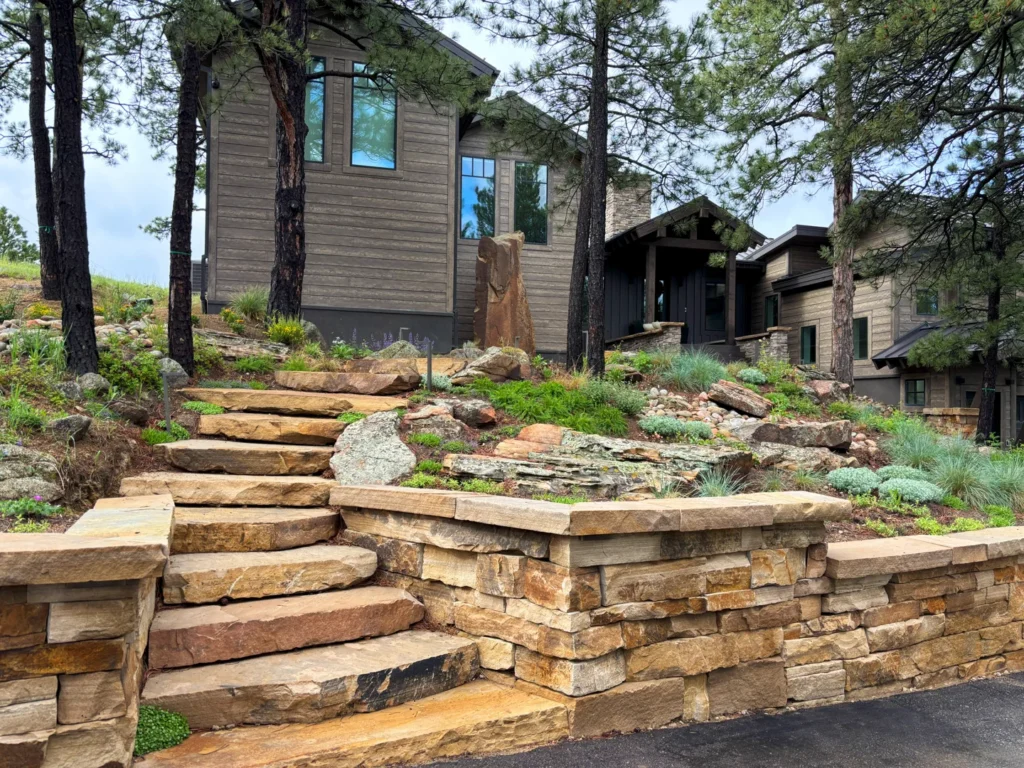
Winter Challenges and Solutions:
- Chinook winds pull moisture from plant tissue faster than frozen ground can replace it, causing winter desiccation in conifers and broadleaf evergreens that looks like drought stress. Anti-desiccant sprays in late November and physical windbreaks for young plantings both help.
- Use sand or approved ice melt products on hardscape rather than rock salt. Rock salt damages pavers and harms soil chemistry near planted areas.
- Boulder has a significant deer population. Winter browsing puts pressure on young plantings and is a real problem in neighborhoods bordering open space. Strategies such as protective tree tubes and fencing pay for themselves quickly in deer-prone areas.
Winter is also when we do some of our best planning work with homeowners. We can walk through your property, complete CAD drawings, prepare HOA submittals, and have everything ready to move the moment spring conditions allow. A winter consultation means we can start in April rather than joining a backlog in June. Let’s talk about your yard today.
How Thoughtful Boulder Landscape Design Reduces Your Maintenance Load
Every maintenance problem in this guide has a design solution upstream. Freeze-thaw cracks, drainage failures, and overwatering in clay are design and installation outcomes, not climate facts.
Design Solutions for Maintenance Reduction:
- Native, water-wise plants matched to Boulder’s actual conditions require far less supplemental watering, fertilizing, and pest management than species that struggle here. Prioritizing Colorado-adapted plant palettes reduces the weekly care demands that come with fighting the wrong plants in the wrong soil.
- Proper grading and drainage installation prevents the chronic problems that clay soils create when water has nowhere to go. We’ve seen yards where the same drainage problem gets patched every spring because the original grading was never corrected.
- Xeriscape design cuts water consumption by up to 50 percent while reducing time spent managing irrigation and turf stress.
- Smart irrigation eliminates the guesswork that leads to overwatering in clay and underwatering during heat spikes, and permeable hardscape reduces runoff and erosion in sloped or clay-heavy yards.
Seasonal Maintenance and HOA Compliance in Boulder-Area Communities
HOA compliance is a concrete, time-sensitive concern in newer developments in Erie, Broomfield, and parts of Lafayette. Most HOAs define completion windows tied to the growing season, so spring startup deadlines and fall cleanup requirements are fixed dates, not suggestions.
Handling HOA Requirements:
Common requirements include plant palette restrictions, hardscape material specifications, fence approvals, and turf-coverage rules. HOAs typically want plans, plant schedules, material callouts, and sometimes stamped drawings before approving anything. We handle submittal documentation in-house, and when a project needs formal CAD plans, we help prepare them. The same team that designs your landscape can help manage the approval paperwork, removing a significant coordination burden from homeowners going through this for the first time.
Frequently Asked Questions About Boulder Landscape Maintenance
When should I turn on my irrigation system in Boulder?
Wait until the last frost risk has passed, which in Boulder means late April at the earliest and mid-May for most yards. Walk each zone individually before pressurizing the full system to catch any cracked heads or fittings from winter.
What plants survive Boulder winters without a lot of maintenance?
Native and drought-tolerant species adapted to Front Range conditions hold up best, including ornamental grasses, native perennials with established root systems, and properly sited shrubs. A well-matched plant palette is the most reliable low-maintenance decision you can make.
How often should I water my yard during Boulder's summer restrictions?
Follow the City of Boulder's odd/even schedule during restriction periods and water early in the morning to reduce evaporation. In clay soils, deep and infrequent watering outperforms light daily watering, which encourages shallow root systems that stress in heat.
What is the best time to plant trees and shrubs in Boulder?
September is the strongest planting window because soil is still warm enough for root establishment before dormancy. Fall-planted trees and shrubs typically establish more reliably in Boulder's clay soils than the same species planted in May.
How do I protect my hardscape from Boulder's freeze-thaw cycles?
Start with a material and installation spec that accounts for Front Range conditions from the beginning. Properly set pavers with adequate base depth, flexible mortar joints, and drainage that keeps water from pooling beneath surfaces reduce freeze-thaw damage significantly. Annual fall inspections let you catch small shifts before they become larger repairs.
Does Stone & Leaf offer ongoing landscape maintenance contracts?
Stone & Leaf is a design-build firm, not a weekly mowing or routine maintenance service. We design and install landscapes built to minimize seasonal upkeep, so you're less dependent on a maintenance crew.
Ready to Build a Boulder Landscape That Takes Care of Itself?
Seasonal maintenance in Boulder is manageable when your landscape is designed right from the start. Freeze-thaw protection, water efficiency, and drainage that works in clay soil aren’t annual repair problems when they’re addressed at the design and installation stage by people who understand the Front Range from years of working in it.
Why Choose Stone & Leaf
- Stone & Leaf Landscaping has served Boulder-area homeowners since 2008, with the owner on-site daily for every project, managing design, irrigation, hardscape, planting, fencing, and more under one contract and one phone number.
- Time-and-materials pricing comes with a 15 percent do-not-exceed cap. We’ve earned Thumbtack Top Pro status from 2017 through 2020, and hold a 4.7 rating across 90+ reviews.
Our free on-site consultation is low-pressure and specific: We’ll walk your property, talk through your goals, and give you a ballpark budget range before any project commitment is made. Call 720-338-3002 or schedule your free on-site consultation online today.
Let’s Talk About Your Yard Today!
Leave a Reply