


Low-Maintenance Landscaping Ideas for Busy Boulder Families
Low-maintenance landscaping replaces time-consuming turf with Colorado-specific plants and hardscape materials that work in our semi-arid climate. Local households often use over 10,000 gallons of water per week for lawn irrigation during the summer months, but switching to native alternatives can reduce that volume by 50 to 75 percent. At Stone & Leaf Landscaping, we can help you build a yard that functions for your daily life without requiring you to spend every weekend on maintenance tasks.
Families throughout Boulder, Louisville, Lafayette, Erie, Broomfield, and Longmont are discovering that traditional grass setups were designed for much wetter regions. Most generic landscaping advice found online fails to account for Front Range freeze-thaw cycles, Colorado water restrictions, or the HOA requirements that govern many local neighborhoods. This article provides specific strategies that hold up to local conditions and details how we can implement these changes for your property. When you are ready to stop spending your Saturdays on yard work, we can discuss a plan to make your outdoor space more manageable. Let’s talk about your yard today!
What Low-Maintenance Landscaping Actually Means in Boulder
Low-maintenance landscaping in Boulder, involving xeriscaping and drought tolerant plantings, replaces high-water turf with native plants, permeable hard surfaces, and smart irrigation systems suited for the Front Range climate. Because we live in USDA Zone 5b/6a with only 14 inches of average annual rainfall, this localized approach reduces weekly yard work while keeping your outdoor areas functional. This transition does not eliminate maintenance entirely, but it significantly reduces the time and resources you must invest to keep the yard looking good.
The distinction is important because generic articles often suggest swapping bluegrass for ornamental grasses that still require frequent watering and pruning.
In our region, effective design relies on the realities of intense sun, dry air, and dramatic temperature swings that impact rocky or clay-heavy soils. A yard built with these local environmental factors in mind will largely take care of itself once the plants are established.

Why Local Climate Makes Standard Landscaping Advice Ineffective
Many national landscaping lists include suggestions that work well in the Midwest or Pacific Northwest but fail quickly in the Front Range. Water is the primary issue, as our 14-inch average rainfall is far below the national average and local water restrictions make traditional spray systems expensive to operate. Most articles assume you have unlimited water access, which is not a reality for homeowners in Colorado.
Temperature swings also play a major role in how materials behave at 5,400 feet of elevation. Because summer afternoons hit 95 degrees and winter nights can drop well below zero, the constant freeze-thaw cycle often cracks poured concrete sidewalks and patios within just a few years. Also, the UV intensity at high altitudes stresses plants that might thrive at sea level, often burning foliage or bleaching materials that are rated for full sun in lower elevations. Our soil adds another layer of difficulty because it is often compacted, alkaline, and heavy with clay, which prevents generic plants from growing successfully.

The 5 Elements of a Truly Low-Maintenance Boulder Yard
A yard that requires less work is the result of intentional design decisions that reduce the amount of time and money the space demands from you. By integrating these five elements, we create outdoor environments that are both beautiful and resilient.
- Native and xeric plant selection: Plants adapted to the Front Range do not need constant attention because they can handle cold winters and dry summers without significant intervention.
- Permeable hardscape: Materials like pavers, flagstone, and gravel reduce the size of the lawn while handling soil movement better than solid concrete slabs.
- Smart drip irrigation: These systems deliver water directly to the roots of your plants, which reduces waste and prevents fungal issues by keeping the leaves dry.
- Organic mulch and groundcover: A thick layer of wood chips or shredded bark stabilizes soil temperatures and prevents weeds from taking over your planting beds.
- Defined drainage: Because Boulder often experiences heavy summer storms, we use dry creek beds and gravel swales to direct water away from your foundation and play areas.
If you want to see how these elements can work together on your own property, you can schedule a free consultation with Hayden, owner at Stone & Leaf, or call 720-338-3002.
Native Plants That Thrive with Minimal Intervention
Native perennials can reduce maintenance by up to 70 percent compared to traditional ornamental plants. Most of these species survive local droughts without extra watering because they evolved to grow in this specific environment. We use a specific palette of plants for Front Range yards that offer color and texture without demanding your attention every weekend. Beautiful doesn’t have to mean bare!
- Yarrow: This plant fills gaps quickly and handles dry summers without needing you to trim or deadhead the flowers to keep it looking tidy.
- Penstemon: These flowers bloom for several weeks and require very little water once they have spent one full season in the ground.
- Colorado blue columbine: These plants return and spread reliably in shaded areas under trees where traditional grass often fails to grow.
- Blue grama grass: This native prairie grass uses roughly 80 percent less water than Kentucky bluegrass and maintains a fine texture without regular mowing.
- Rabbitbrush: Providing gold color late in the season, this shrub thrives in rocky soil and requires zero irrigation once it is established.
- Sedum: These varieties are ideal for the hottest spots in your yard because they cover bare ground and require almost no care between seasons.
- Native groundcovers: Species like silver sage and creeping phlox suppress weeds and can tolerate a reasonable amount of foot traffic from kids or pets.
For more details on how to use these species, you can review our article highlighting native plants for pollinators and water-wise landscapes.
Hardscape: The Foundation of an Easy Care Yard
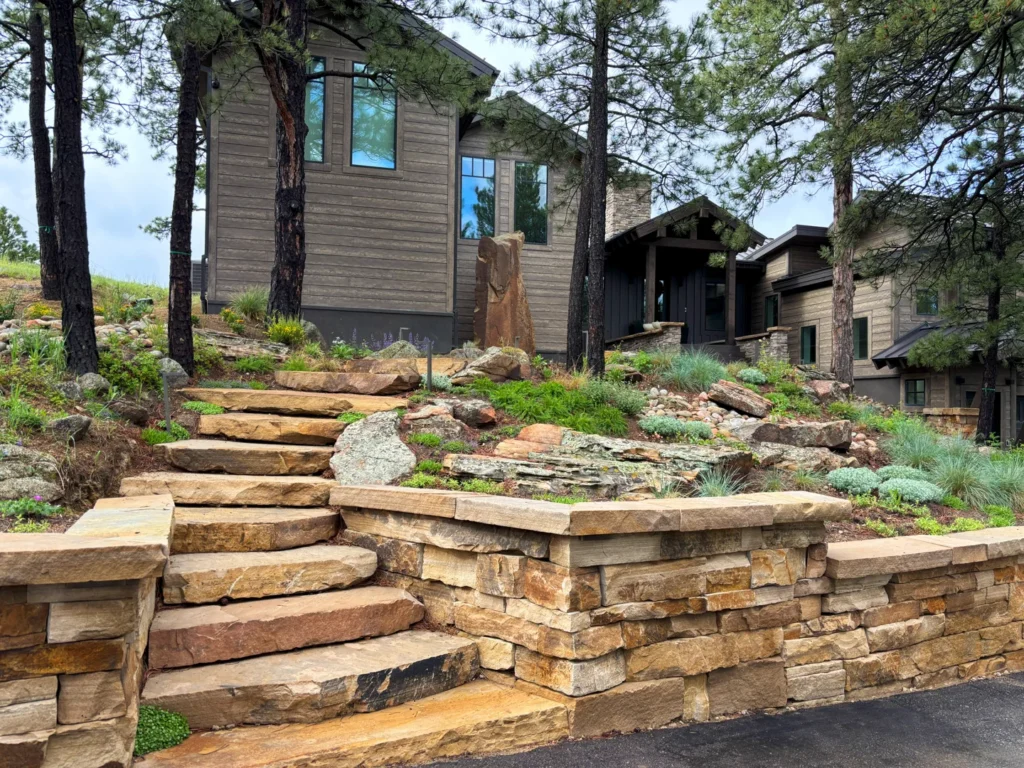
The most effective way to reduce yard work is to replace sections of the lawn with well-designed hard surfaces. Every square foot of stone or gravel you install is an area that no longer requires mowing, fertilizing, or edging. For a family on a standard lot, converting even a portion of the turf to hardscape can significantly change how much time is spent on maintenance.
We choose materials that are specifically suited for the local climate. Concrete pavers are better than poured slabs because the joints allow for movement during temperature changes without causing cracks. Flagstone set on a gravel base offers a natural look while providing a stable, mud-free surface for walking or playing. We manage Boulder hardscaping and fencing in-house, which means you only have to deal with one team for the entire length of the project.
Family-Friendly Landscaping: Safe for Kids and Pets
Many parents tell us that creating a mud-free play area is their highest priority when they decide to renovate their landscaping.
The muddy area where the lawn meets the back door is a common frustration for families in Boulder and surrounding neighborhoods. We solve this by using stabilized gravel or flagstone to create clean transitions that prevent dirt from being tracked into the house. We also select native plants that are generally non-toxic, such as rabbitbrush and yarrow, so your pets and children can play safely throughout the year.
For families living in areas prone to wildfires, the way we arrange plants and hard surfaces also helps create defensible space around the home. Using stone buffers and fire-wise shrubs reduces the risk of embers catching near the house, which adds a layer of safety that many homeowners find reassuring. We also design specific dog runs using gravel or decomposed granite to give pets a dedicated space that drains quickly and does not wear out from heavy use.
Xeriscape and Local Turf Removal Rebates
If you decide to replace your grass with a water-wise design, the City of Boulder offers rebates that can reach up to $3,000. This money can help cover a significant portion of your installation costs as the city encourages homeowners to reduce outdoor water consumption. Our team produces the drawings and documentation required for these applications to ensure the process is as smooth as possible for you.
A professional xeriscape project is not a dry desert filled only with rocks. Instead, it is a planned space with drought-adapted plants and efficient irrigation that feels like a complete yard. Switching to this style can reduce your water bills by over 50 percent, which often allows the project to pay for itself over several years. We help you understand all your options.
Smart Irrigation: Watering Less Without the Effort
Efficient yard care starts with an irrigation system that functions automatically. We install drip systems with controllers that connect to local weather data, meaning the system will skip a cycle if it rained recently or if the temperature drops. This ensures that your plants receive exactly what they need based on the actual conditions in your yard rather than a generic schedule.
We also separate different areas of your yard into specific zones. This is important because overwatering native plants can be just as damaging as a drought, so we ensure the water-wise beds are not receiving the same amount of moisture as any remaining lawn sections. Our Boulder irrigation, sod, and drainage services include full installation and seasonal winterization to protect your pipes from freezing during the winter months.

HOA Requirements and Landscape Design Management
HOA rules are often a source of stress for local families who want to modernize their yards. Most associations require formal plans and drawings before you can make changes to your fencing or remove your lawn. We simplify this process by providing the CAD drawings and submittal packages needed to get your project approved without unnecessary delays.
Many people assume they must hire a separate landscape architect to handle these requirements, but our internal design support often satisfies HOA needs. We help manage the communication and documentation so you don’t have to spend your time in review meetings or redrawing plans. You can learn more about this process on our Boulder Landscape Design & Lighting page.
How We Simplify the Landscaping Process for Your Family
Having worked with Front Range soil for more than 17 years, we’ve seen how much homeowners appreciate a yard that does not feel like a second job. Many people worry about managing multiple contractors or seeing their budget grow unexpectedly during construction. We address these concerns by operating under a single contract that covers everything from the initial design to the final planting.
Ownership is on-site every day to manage the crew and answer your questions directly, which ensures the project stays on track and meets our standards. This level of oversight is why our Boulder landscaping company maintains a high rating on Thumbtack and consistently earns professional recognition for our work. We use do-not-exceed pricing to ensure the quote you receive at the start is the maximum you will pay, which eliminates the stress of hidden costs or surprises.
Moving toward water-wise design is a practical choice for the future of our region. We enjoy helping families make this transition in a way that looks planned and fits their lifestyle for many years to come. You can book a consultation to walk your property with us and discuss how to transform your space. [stoneandleaf.us/contact-us/ or 720-338-3002]
Practical First Steps for Your Yard Transformation
If you are ready to start, we recommend a simple process to help you get organized before we begin the installation.
- Audit your turf: Walk your yard to see which parts you actually use and which are just taking up water and time.
- Check your HOA rules: Request a copy of the landscape guidelines for your neighborhood so we can design a plan that meets their criteria.
- Define your goals: Decide if you are primarily focused on reducing your water bill, creating a play area, or increasing the safety of your home.
- Research local rebates: Check the current status of turf removal programs to see how much money you might be eligible to receive back.
- Book an on-site visit: A personal consultation allows us to look at your soil, drainage, and sun exposure to create a plan that actually works.
For more information on saving water, our guide on Practical Boulder Landscaping Strategies to Save Water and Money can help with additional context.
Start With a Free On-Site Consultation
You can schedule a visit with Hayden, who personally manages every site evaluation and will provide a clear plan for your budget and timeline. Most comprehensive projects fall between $10,000 and $70,000, but our transparent pricing ensures you know the cost ceiling before any work begins. We serve clients throughout the Boulder area, including Louisville, Lafayette, Erie, and Broomfield.
Call 720-338-3002 or send us a message today to get started.
Related Resources for Boulder Homeowners
- Master the 7 Water-Wise Principles of Boulder Xeriscaping: A comprehensive look at water-wise designs and Xeriscaping in Boulder.
- Native Plants for Pollinators and Water-Wise Landscapes: How to choose species that support local wildlife.
- How to Make Your Home Eco-Friendly Without Compromising Style: Principles for creating a yard that lasts.
- About Hayden and Stone & Leaf: Information on our history and our approach to landscaping.

Leave a Reply