

Boulder Yard Care, Season by Season: Irrigation, Lawn & Drainage Timing That Actually Matters
Generic lawn calendars don’t work in Boulder, CO. Miss a winterization window or open your irrigation system too early, and you’re looking at cracked supply lines, dead sod, or a flooded basement. This guide, brought to you by Stone & Leaf Landscaping, covers boulder seasonal yard maintenance built around irrigation, turf, and drainage.
The Short Answer: What Boulder Yards Actually Need Each Season
Here’s the quick version before diving deeper.
- Spring (March-May): Irrigation startup after consistent above-freezing nights, drainage inspection before snowmelt peaks, and turf assessment after the last frost.
- Summer (June-August): Deep-and-infrequent irrigation scheduling, heat stress monitoring, and hailstorm recovery when needed.
- Fall (September-November): Overseeding and sod renovation window, fall fertilization, and irrigation winterization before the first hard freeze.
- Winter (December-February): System rest, smart snow management, and the best time to plan spring installation projects before scheduling fills up.
Why Boulder's Climate Breaks Generic Lawn Care Calendars
Climate and Soil Factors
- Compressed growing season: Cool-season grasses here face hard frost risk into late May and first freeze risk arriving as early as late September or early October. That’s a shorter window than most national guides assume.
- Clay-heavy soils: Boulder’s clay soils hold water in spring, which creates drainage problems when snowmelt hits. By mid-summer, those same soils crack and begin repelling water, which changes how irrigation needs to be scheduled entirely.
- Low humidity and intense UV: Turf dries out faster here than in higher-humidity climates. Grasses that would recover from heat stress in the Midwest or Southeast often don’t get that same recovery window on the Front Range.
Weather Challenges
- Chinook winds: Warm, dry Chinook winds accelerate soil drying in late winter and early spring before grass is ready to handle moisture loss. Homeowners who mistake this warming for spring often start irrigation too early and then lose heads to a late-season freeze.
- Boulder water restrictions: During drought-watch periods, the City of Boulder caps outdoor watering schedules. A calendar built for a Midwest lawn won’t account for these limits.
We’ve been working in Boulder soils since 2008, and the difference between a calendar that works here and one copied from a Midwest turf guide comes down to tighter timing windows, more expensive consequences when you miss them, and soil that behaves in ways that surprise homeowners who moved here from other regions.
Spring (March-May): Irrigation Startup, Drainage Checks, and Sod Readiness
Spring is the highest-stakes season for all three systems, and the order you address them matters. Drainage should come first, then irrigation startup, then turf assessment. Each one affects the others.
Irrigation Startup Timing
Don’t open your system until nighttime temperatures are consistently above freezing, which in Boulder typically means late March through mid-April depending on elevation and microclimate. Opening too early risks freeze damage to heads and supply lines. At startup, check for cracked heads, winter settling shifts in coverage, and controller schedules that haven’t been reset from the previous fall’s reduced settings. Our Boulder sprinkler, sod & drainage services cover full startup inspections so you’re not discovering cracked heads after a full watering cycle has already run.
Drainage Before Snowmelt
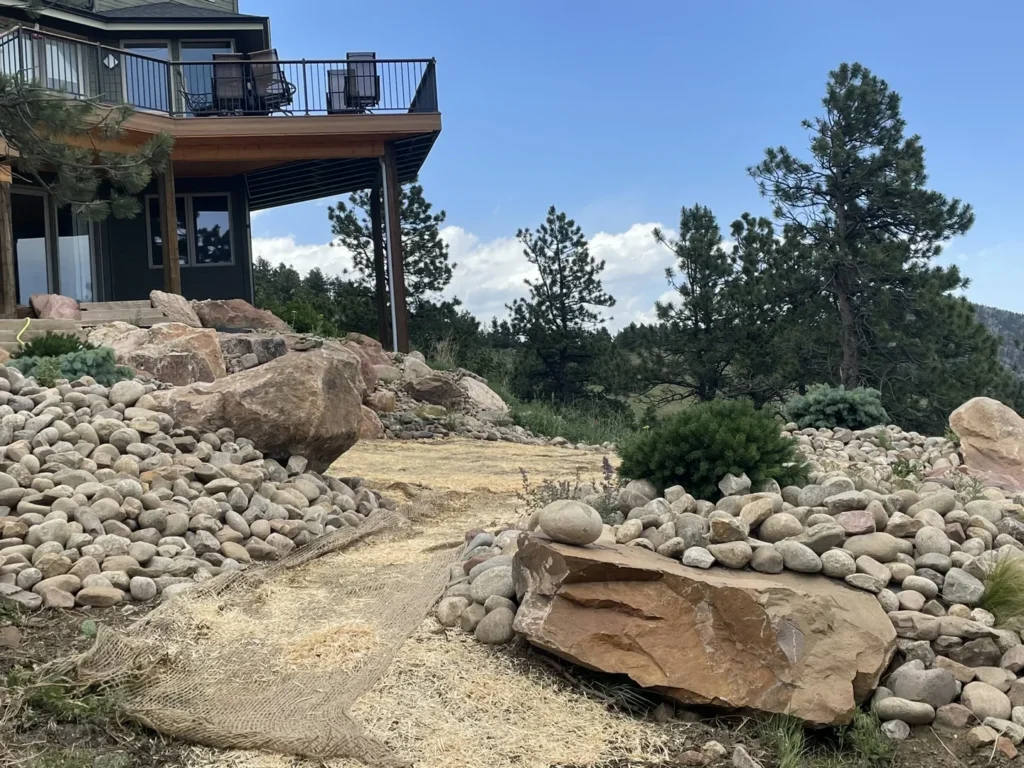
Check swales, downspout extensions, and low spots before March snowmelt peaks. Boulder’s clay soil doesn’t absorb water quickly in spring, so surface drainage problems that were barely visible in fall become flooding problems by April. A small grading issue near a foundation can cause significant seepage once snowmelt hits full volume.
Sod and Turf Readiness
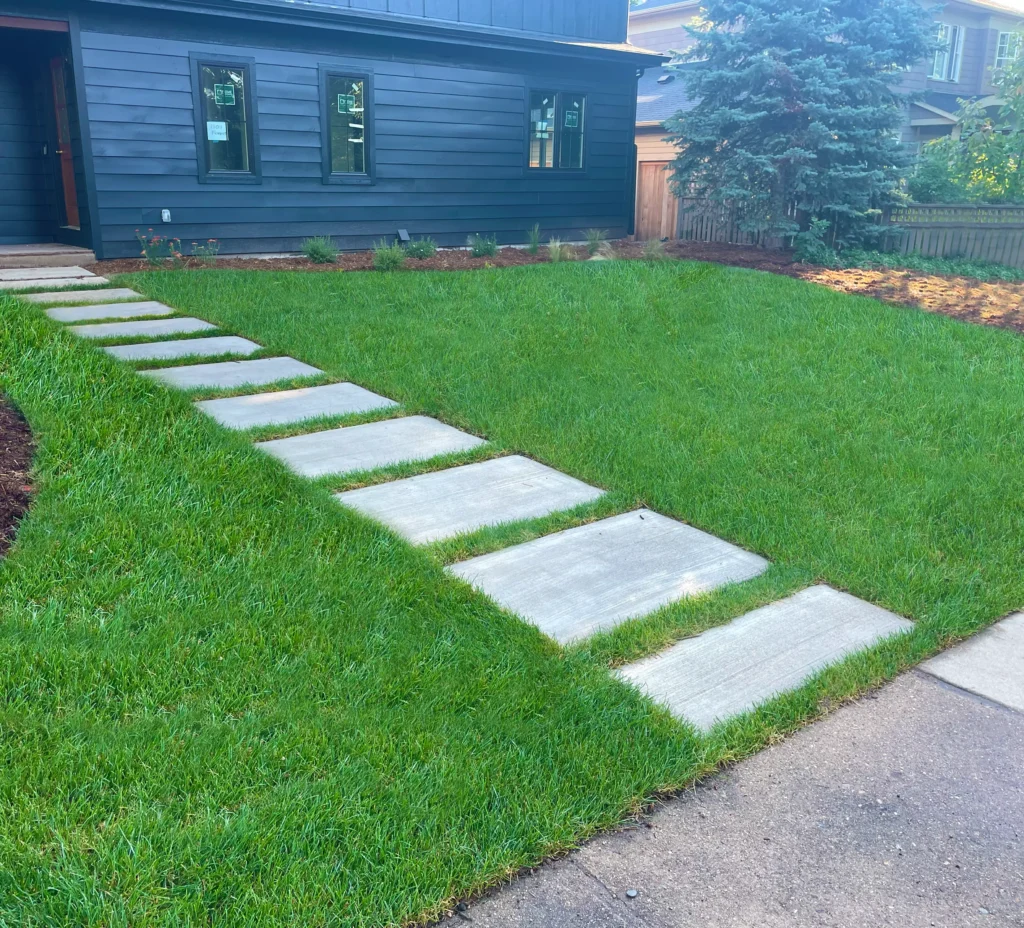
Assess winter damage only after the last frost has passed, not before. Overseed thin areas once soil temperatures reach 50 to 55 degrees Fahrenheit consistently. For new sod installations, hold off until late May when frost risk has cleared. Spring aeration benefits Boulder’s compaction-prone clay soils and improves water penetration before the summer heat sets in. Boulder lawn maintenance decisions made in May set the baseline for everything that follows.
Boulder Irrigation Startup: The Timing Mistakes We See Every Spring
Common Startup Errors
- Opening too early: Homeowners who open systems during a warm spell in early March often lose heads to a late-season freeze. Boulder’s last frost date averages late May at some elevations, with valley floor properties varying considerably.
- Stale controller schedules: Running the same controller schedule from the previous fall without adjusting for spring soil moisture levels and shorter days creates both waste and stress on the turf.
A professional inspection at startup checks system pressure, coverage patterns, and head alignment after winter soil movement. Smart controller scheduling is worth considering here because it adjusts run times based on actual evapotranspiration rates rather than a fixed timer that stays the same whether it rained yesterday or hasn’t rained in three weeks.
Spring Drainage: What to Inspect Before Runoff Season
Walk your property specifically looking for these conditions:
- Surface swales that have settled or are blocked with winter debris
- Downspout extensions and pop-up emitters that aren’t routing water away from the foundation
- Signs of freeze-thaw heave that shifted grading around foundations, patios, or retaining walls
- French drain inlets clogged with debris from the fall
For more on what boulder yard drainage problems look like before they become expensive, see our guide on grading, drainage, and erosion control in Boulder. Our guide on seasonal planting and garden maintenance tips covers timing for Front Range species in more detail if you’re also planning planting changes alongside drainage work.
Spring runoff on Boulder’s clay soils moves fast and erodes quickly. A drainage condition that looks minor in October can cause foundation seepage or strip out newly established sod by April. Learn how we approach drainage & grading before the runoff season starts.
Summer (June-August): Irrigation Scheduling, Heat Stress, and Hailstorm Recovery
Summer in Boulder is about managing the gap between what your irrigation system is delivering and what the grass actually needs. That gap changes week to week as heat builds, and a static schedule can waste water and stress turf at exactly the same time.
Deep-and-Infrequent Watering
Shallow, frequent watering keeps roots near the surface where they’re most vulnerable to heat. Deep, infrequent cycles pull roots downward and build resilience against drought stress. Cool-season grasses in Boulder’s summer heat typically need roughly 1 to 1.5 inches of water per week, split across two or three cycles. July and August require the higher end of that range as evapotranspiration rates climb. Check the City of Boulder outdoor watering guidelines during drought-watch periods before adjusting your schedule upward.
Heat Stress vs. Drought Stress vs. Disease
Dormancy is not death. Cool-season grass going tan in July is often protecting itself, not dying. Grub damage, however, looks similar to drought stress but the turf pulls up in sections rather than staying anchored. Our guide on water-wise lawns and drought-tolerant grass options covers how to read these symptoms and what alternatives reduce the stress cycle entirely.
Hailstorm Recovery
Boulder’s peak hail frequency runs May through August, and bruised sod needs a different response than you might expect. Reduce mowing height slightly, keep watering consistent, and give the turf time to recover before deciding whether re-sodding is necessary. Significant damage is better addressed after the active hail season passes rather than immediately after a single storm. Boulder year-round lawn care means building in recovery time as a normal part of summer planning, not treating hail as an exception.
Water-Wise Irrigation Timing for Boulder’s Compressed Growing Season
Water early in the morning, before 10 AM, to reduce evaporation under Boulder’s intense UV. Evening watering encourages fungal issues in the humid conditions that follow summer afternoon storms. On clay soils, use cycle-and-soak programming that applies water in shorter passes with absorption time in between, rather than one long run that produces runoff before the soil can take it in.
Smart controllers that adjust based on local weather data are worth the investment here. A properly programmed system in Boulder should run a different schedule in a wet June than in a dry August. If you’re considering reducing your turf area to cut water demand further, our Boulder xeriscape guide walks through water-wise design that works in this climate. Working with a knowledgeable boulder irrigation company means getting zone-by-zone scheduling that reflects your actual property conditions, not a generic timer setting. Our xeriscape seasonal planting guide covers Front Range species timing in more detail for readers planning a longer-term transition.
Fall (September-November): The Most Important Season for Boulder Lawns
What happens in September and October determines how your yard enters and exits winter. Fall is when the work you do actually pays off the following spring, and it’s the season Boulder homeowners most often underestimate.
Overseeding and Sod Renovation Window
Late August through mid-September is the best window for overseeding cool-season grasses in Boulder. Soil temperatures are still warm enough for germination, but cooling air temperatures reduce stress on new growth. New sod installations can succeed in early fall if completed before late October, giving roots enough time to establish before the ground freezes.
Fall Fertilization
A single fall fertilizer application in late September or early October, applied when growth slows but roots are still active, builds carbohydrate reserves that carry the grass through winter. For cool-season grasses, this fall application matters more than a spring application because it feeds root development rather than top growth. Roots continue working after the grass stops growing visibly, and feeding them at the right time is the difference between a lawn that bounces back in April and one that comes out of dormancy thin and stressed.
Drainage Prep Before Freeze
Check all drainage infrastructure before the first hard freeze. Frozen drainage channels redirect melt water in unpredictable ways when spring arrives. Any low spots or grading problems you noticed during summer should be addressed before the ground hardens. This is where boulder drainage solutions and boulder drainage grading work pays off: fixing a small grading issue in October is far less disruptive than addressing a drainage failure in April with a saturated yard and frozen subsoil just below the surface.
Irrigation Winterization: When and How to Blow Out Your Boulder System
Target winterization before the first consistent hard freeze. In Boulder, that means treating October 15th as the safe deadline, but scheduling earlier if an early freeze is forecast. Even one freeze event with water remaining in supply lines can crack PVC fittings, split backflow preventers, or damage valve manifolds, and those repairs cost significantly more than a professional blowout.
What the Blowout Process Involves
- Compressed air pushes residual water out of every zone, head, and supply line
- Requires a commercial compressor sized to your system and specific pressure knowledge for each zone type
- Running too much pressure damages heads; too little leaves water behind
- This is one task where DIY savings can create expensive repair bills
As part of Boulder sprinkler, sod & drainage services, we handle winterization with the same attention to system condition we bring to spring startup, which means we often catch issues during blowout that would have caused failures the following spring.
Ready to schedule your fall blowout? Call us at 720-338-3002 or book a free consultation.
Winter (December-February): System Rest, Snow Management, and Planning Ahead
Snow Management for Lawn Health
- Don’t pile snow repeatedly over the same sod areas. Sustained weight compacts turf crowns and delays spring recovery.
- Avoid de-icing salts and chemical ice melt products near lawn edges. Salt loading in soil causes significant turf burn and takes time to flush out. Use sand or gravel-based traction products instead.
- Minimize foot traffic and equipment on frozen turf. Frozen grass crowns are brittle and don’t bounce back from compaction the way thawed turf does.
Drainage After Heavy Snowfall
Watch for ice dams forming in swales or against foundation walls after heavy snowfall. These redirect melt water during spring thaw, often toward foundations or under patio slabs. A drainage channel that’s blocked with ice in February will funnel concentrated runoff in ways the original grading never intended.
Winter Planning Window
January and February are the best months to plan spring installation projects. Scheduling fills quickly once the season opens, and HOA approval documents and CAD plans, drawn up by Hayden’s architect wife for projects that need them, can be prepared during winter so nothing delays a spring start. Our time-and-materials pricing with a 15% do-not-exceed cap applies to spring projects scoped during winter consultations, so you know your ceiling before any work begins.
Boulder Seasonal Yard Maintenance: Quick-Reference Calendar
Use this boulder lawn care calendar as a month-by-month reference. Every task ties back to irrigation, turf, or drainage, the three systems that drive long-term yard health on the Front Range.
- March: Begin drainage inspection after snowmelt. Check swales, downspout extensions, and low spots. Monitor for freeze-thaw heave around foundations and patio edges.
- April: Irrigation startup after consistent above-freezing nights. Inspect heads, pressure, and coverage. Assess winter turf damage. Schedule aeration if clay compaction was a problem the previous year.
- May: Final frost risk window. Hold new sod installation until late May. Overseed thin areas once soil temps hit 50 to 55 degrees Fahrenheit. Confirm irrigation schedule is calibrated for spring soil moisture, not summer demand.
- June: Shift irrigation to deep-and-infrequent cycles. Apply mulch before peak heat. Check City of Boulder outdoor watering guidelines if drought-watch conditions are in effect.
- July-August: Adjust scheduling as evapotranspiration rates climb. Water before 10 AM. Monitor for heat stress versus dormancy. Hailstorm recovery: reduce mowing height, maintain consistent watering, hold re-sod decisions until storm season passes.
- September: Overseed or sod renovation window closes mid-month. Apply fall fertilizer when growth slows. Begin dialing back irrigation frequency as nights cool.
- October: Irrigation winterization by mid-month (target October 15 as deadline). Final drainage inspection before hard freeze. Address any grading problems before ground hardens.
- November: Confirm system blowout is complete. Check drainage inlets for debris. Note any areas where ice or standing water appeared during fall for spring remediation planning.
- December-February: Snow management near lawn edges and drainage channels. Off-season planning and consultation for spring projects. HOA submittals and CAD drawings can be prepared now.
Frequently Asked Questions About Boulder Seasonal Yard Care
When should I start my sprinklers in Boulder?
Target late March through mid-April when nighttime temperatures are consistently above freezing. The exact timing varies by elevation and microclimate. Always run a professional inspection at startup to check pressure, head alignment, and coverage after winter soil movement before you run the system on a full schedule.
When is the best time to plant sod in Boulder, Colorado?
Two windows work well: late spring after late-May frost risk has cleared, or early fall from mid-August through mid-September. Fall installations benefit from cooling air temperatures that reduce transplant stress, but the sod needs enough time before late October to establish roots before the ground freezes.
When should I winterize my sprinkler system in Colorado?
Target October 15th as your safe deadline in Boulder. If an early freeze is forecast before that date, move sooner. A single hard freeze with water in the supply lines can crack PVC fittings and split backflow preventers. Professional blowout requires a commercial compressor and system-specific pressure calibration; estimating your way through it is not safe.
How do I know if my Boulder yard has a drainage problem?
Look for standing water that remains 24 hours or more after rain, soft or spongy spots near the foundation, erosion channels cutting through the lawn after storms, and recurring basement moisture following snowmelt. These signs point to grading, swale, or subsurface drainage issues that tend to worsen each season without correction.
Does Stone & Leaf do ongoing lawn maintenance like mowing?
No. We're a design-build installation company. Our seasonal scope covers irrigation system care (startup inspections, winterization, tune-ups), sod installation and establishment guidance, and drainage installation and remediation. We don't offer weekly mowing, fertilization programs, or recurring maintenance subscriptions. The work we do creates a yard that functions well and requires less routine upkeep over time.
What is the biggest seasonal mistake Boulder homeowners make with their irrigation system?
Two tie for first place: opening the system during a warm March spell and losing heads to a late-season freeze, or running the same controller schedule year-round without adjusting for seasonal soil moisture, daylight, or temperature changes. Both are preventable with a professional startup inspection and a smart controller calibrated to local evapotranspiration data rather than a fixed timer.
When to Call a Professional vs. Handle It Yourself
Tasks You Can Handle Yourself
- Adjusting controller schedules seasonally as temperatures change
- Checking drainage inlets and swales for debris after storms
- Monitoring turf for early stress symptoms before they become larger problems
- Light overseeding of thin patches in early fall
Tasks That Require Professional Assessment
- Irrigation startup inspection: Pressure testing, head alignment checks, backflow preventer condition, and coverage verification after winter soil movement are technical enough that missed problems tend to cost more than the inspection would have.
- System winterization blowout: Requires a commercial compressor and zone-specific pressure knowledge. Too much pressure damages heads; too little leaves water in the lines.
- Drainage regrading: Requires grading equipment and accurate slope calculation. An incorrect DIY regrade can make drainage worse by redirecting flow toward the foundation rather than away from it.
- Sod installation on new or renovated areas: Proper soil preparation, grading, and establishment care determine whether new sod survives its first summer. Skipping these steps produces a re-do.
The question isn’t just whether you can do it; it’s what the cost of getting it wrong looks like compared to the cost of a professional visit. We use a time-and-materials model with a 15% do-not-exceed cap, so you know your ceiling before work starts. With 17 years of boulder seasonal yard maintenance and installation work behind us, we routinely catch problems at startup or winterization that homeowners didn’t know existed until they caused visible damage.
Start the Season Right: Talk to Stone & Leaf Before Your Calendar Fills Up
When a spring problem involves irrigation, drainage, and turf at the same time, which they often do in Boulder, coordinating three separate contractors to address them adds time, cost, and frustration. We handle all three systems under one contract, which means a drainage grading issue discovered at irrigation startup doesn’t require a separate call to a different company to fix.
Book your free on-site consultation. January and February are the best months to lock in spring scheduling before the busy season fills up. We serve Boulder, Louisville, Lafayette, Erie, Broomfield, Longmont, and surrounding Front Range communities.
Call us at 720-338-3002, email info@stoneandleaf.us, or request a free consultation online. Stone & Leaf Landscaping, 225 32nd St, Boulder, CO 80305.
For a full overview of what we install and service, visit our irrigation, sod, and drainage services page.
Leave a Reply