
From Privacy to Curb Appeal: A Boulder Homeowner’s Guide to Modern Fencing Options
If you’ve been searching for fencing options in Boulder, you’ve probably noticed that most of the information out there reads like a product catalog. Materials listed. Styles described. Maybe a price range. Not much else.
That kind of content answers a narrow question. It does not help you make a good decision for your specific yard, your HOA, your family, and the way you actually want to live outside.
At Stone & Leaf Landscaping, we have been designing and installing fencing as part of complete outdoor projects across Boulder and the Front Range since 2008. In that time, we have learned that the homeowners who end up happiest with their fence are rarely the ones who picked the most popular material. They are the ones who thought about what they wanted their outdoor space to do before they ever chose a board style or a post depth.
This guide is built around that same thinking.
What Do You Actually Want Your Fence to Do?
Before you compare materials or request a quote, it is worth getting clear on the function your fence needs to serve. Most Boulder homeowners are working toward one or more of these three goals:
- Privacy and seclusion: For a backyard that feels like a retreat rather than a fishbowl.
- Security and safety: For children, pets, or simply controlled access to the property.
- Curb appeal and property definition: Makes the home feel finished and intentional from the street.
Understanding which of these matters most to you shapes every downstream decision: how tall the fence needs to be, which materials make sense, where gates belong, and how the fence interacts with the rest of your yard. A fence designed primarily for backyard privacy looks and functions very differently from one designed for front-yard curb appeal. And a fence that needs to contain a large dog requires different hardware and spacing considerations than one that is purely decorative.
Start with the function. The material and style follow naturally from there.
Boulder's Climate and Why It Changes the Fencing Equation
Boulder is not an average fencing market. The climate here creates conditions that affect material performance in ways that national fencing guides simply do not account for.
For true climate-adapted curb appeal, there are a few realities worth understanding before you commit to a material:
- UV intensity at elevation: Accelerates fading, drying, and surface cracking in wood materials significantly faster than homeowners expect. A cedar fence that would look great untreated for five years in a lower-elevation market may show visible degradation in Boulder within two to three seasons without regular staining or sealing.
- Freeze-thaw cycles: Affect post footings and material expansion. Posts installed without adequate depth and proper footing design are more likely to heave or shift over time, particularly on the Front Range where soil conditions vary and temperature swings are significant.
- Wind exposure: A real structural consideration on the Front Range, not a minor footnote. Taller privacy fences need adequate post depth, proper panel attachment, and in some cases modified spacing to handle sustained wind loads.
- Snow load and dry summer conditions: Create a wide moisture swing that stresses certain materials, particularly lower-grade vinyl products, more than their manufacturers tend to acknowledge.
The best fence for a Boulder property is designed with these conditions in mind, not selected from a national home improvement guide and installed without adjustment.
Fencing Materials: Real Trade-Offs for Front Range Conditions
Here is an honest breakdown of the most common fencing materials we work with in the Boulder area, including where each one performs well and where it falls short.
Cedar and Natural Wood
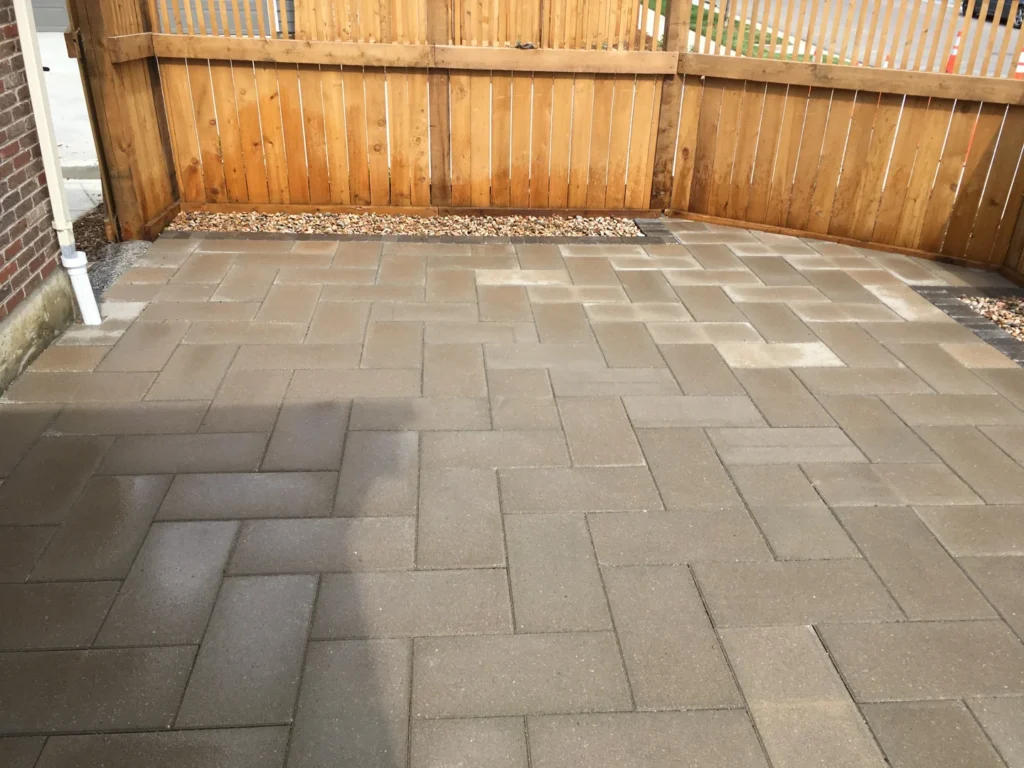
Cedar remains the most popular choice for privacy fencing in Boulder, and for good reason. It has a warmth and character that fits naturally with local architecture and landscapes. It takes stain well, comes in a range of privacy and semi-privacy styles, and when properly maintained, it holds up reliably.
The honest caveat: cedar in Boulder requires real maintenance. UV intensity here dries and cracks wood faster than most homeowners anticipate. If you are not willing to re-stain or re-seal every two to three years, cedar will age faster than you want it to. Go in with realistic expectations and a maintenance plan, and it is an excellent choice.
Vinyl Fencing
Vinyl appeals to homeowners who want low ongoing maintenance, and that appeal is legitimate. It resists moisture, insects, and rot. It does not need painting or staining. For the right application, it delivers solid long-term value.
The watch-out in Boulder is product quality. Lower-grade vinyl products can expand, contract, and become brittle under Boulder’s UV exposure and temperature swings faster than warranties suggest. If you are going vinyl, the quality of the product matters as much as the installation.
Composite Fencing
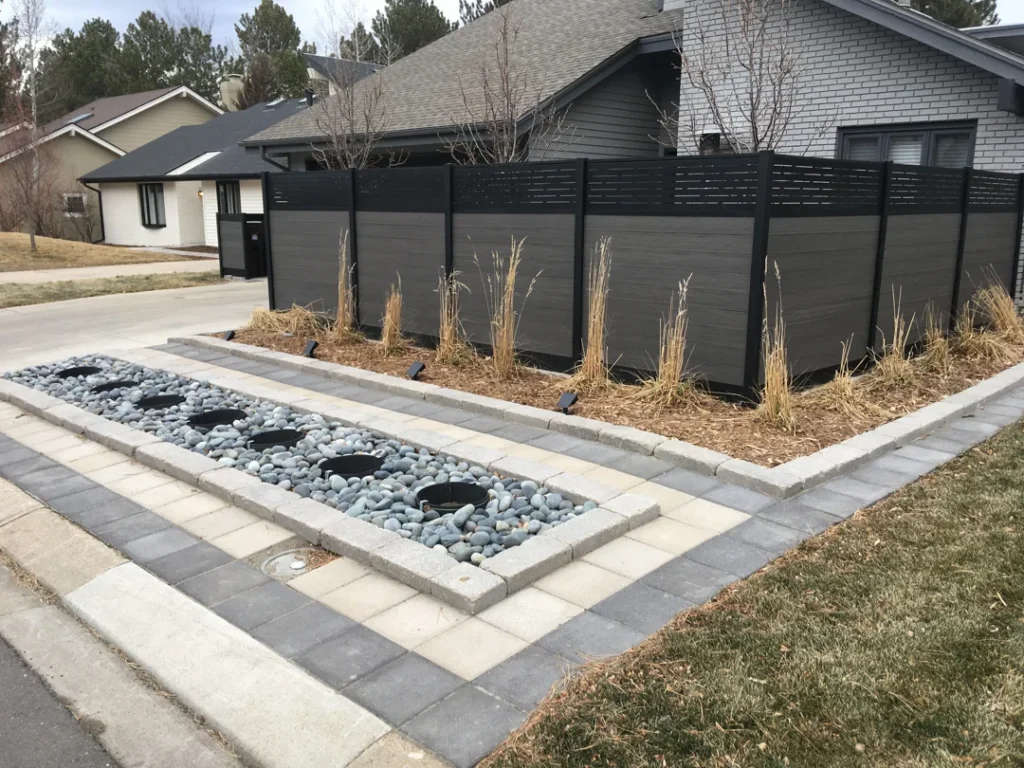
Composite fencing has improved significantly in recent years and is a strong option for homeowners who want the look of wood without the maintenance demands. It resists rot, fading, insects, and moisture better than natural wood, and many composite products are made with recycled materials, which appeals to Boulder’s sustainability-conscious homeowners.
The trade-off is the upfront cost. Composite runs higher than cedar or vinyl on the front end. The lifecycle value, measured in reduced maintenance time and longer replacement intervals, often justifies that investment, particularly for homeowners planning a long-term landscape.
Ornamental Iron, Steel, and Aluminum
Metal fencing is not a privacy solution, but it is one of the most effective options for curb appeal, property definition, and architectural character. Aluminum in particular holds up well in Front Range conditions: it resists rust, handles temperature swings without significant expansion, and requires minimal maintenance over time.
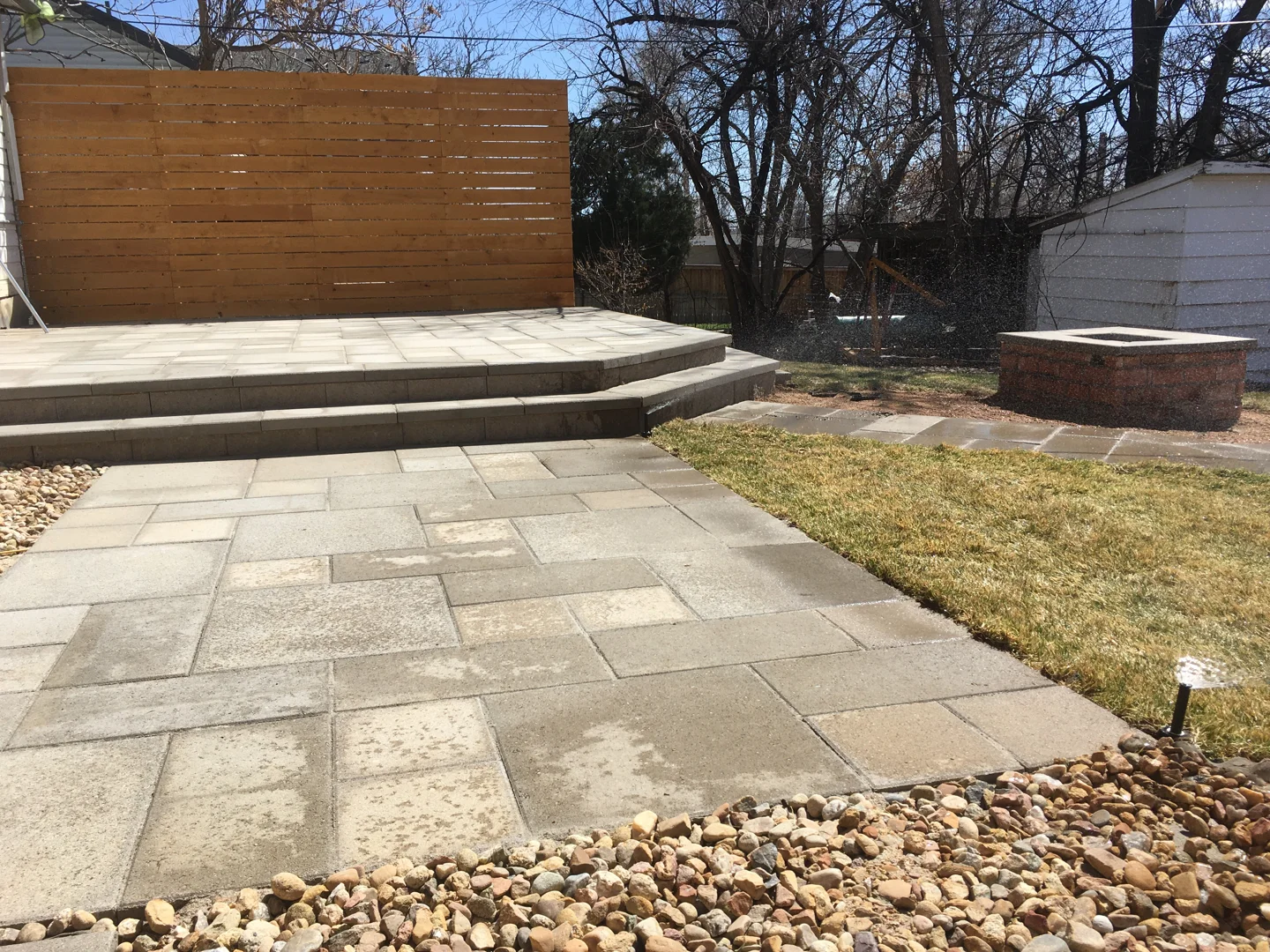
Metal fencing works especially well when it is designed alongside hardscaping elements. A clean aluminum fence next to a stone retaining wall or paver patio creates a cohesive, finished look that neither element achieves on its own. That kind of integration is where design-build experience pays off.
Mixed Materials and Custom Approaches
Increasingly, Boulder homeowners are asking for combinations: cedar panels with steel posts, composite boards with stone pillar accents, horizontal wood with a metal frame. These approaches can balance privacy, visual openness, and design character in ways that single-material fences cannot.
They also require more careful planning. Mixed-material fencing looks intentional when it was designed as part of the broader yard. It looks like a patchwork when it was assembled from separate decisions made at different times. This is one area where working with a design-build company rather than a fence-only installer makes a meaningful difference.
HOA Rules and City Permits: What Boulder Homeowners Need to Know
This is the section most fencing guides skip over, and it is the one that causes the most delays.
City of Boulder basics:
- Fences under 7 feet are generally exempt from building permit requirements
- Rear and side yard fences are typically permitted up to 6 feet in height
- Front yard fences are typically limited to 3 to 4 feet
- Exceptions apply in floodplains, wetlands, historic districts, and on individually landmarked properties
HOA rules are a separate layer entirely: If you live in an HOA-governed community, your HOA’s guidelines may be more restrictive than city code on height, materials, colors, and styles. City code sets the floor. Your HOA may set a lower ceiling.
The homeowners who run into the most frustrating delays are the ones who assumed their HOA rules matched city code. They are two different sets of requirements and they need to be checked independently before any materials are ordered.
We have extensive experience preparing HOA documentation, including CAD drawings for approval submissions, for clients across Boulder, Louisville, Lafayette, and surrounding communities. If your project requires HOA approval, that’s a process we can help guide you through as part of the full installation.
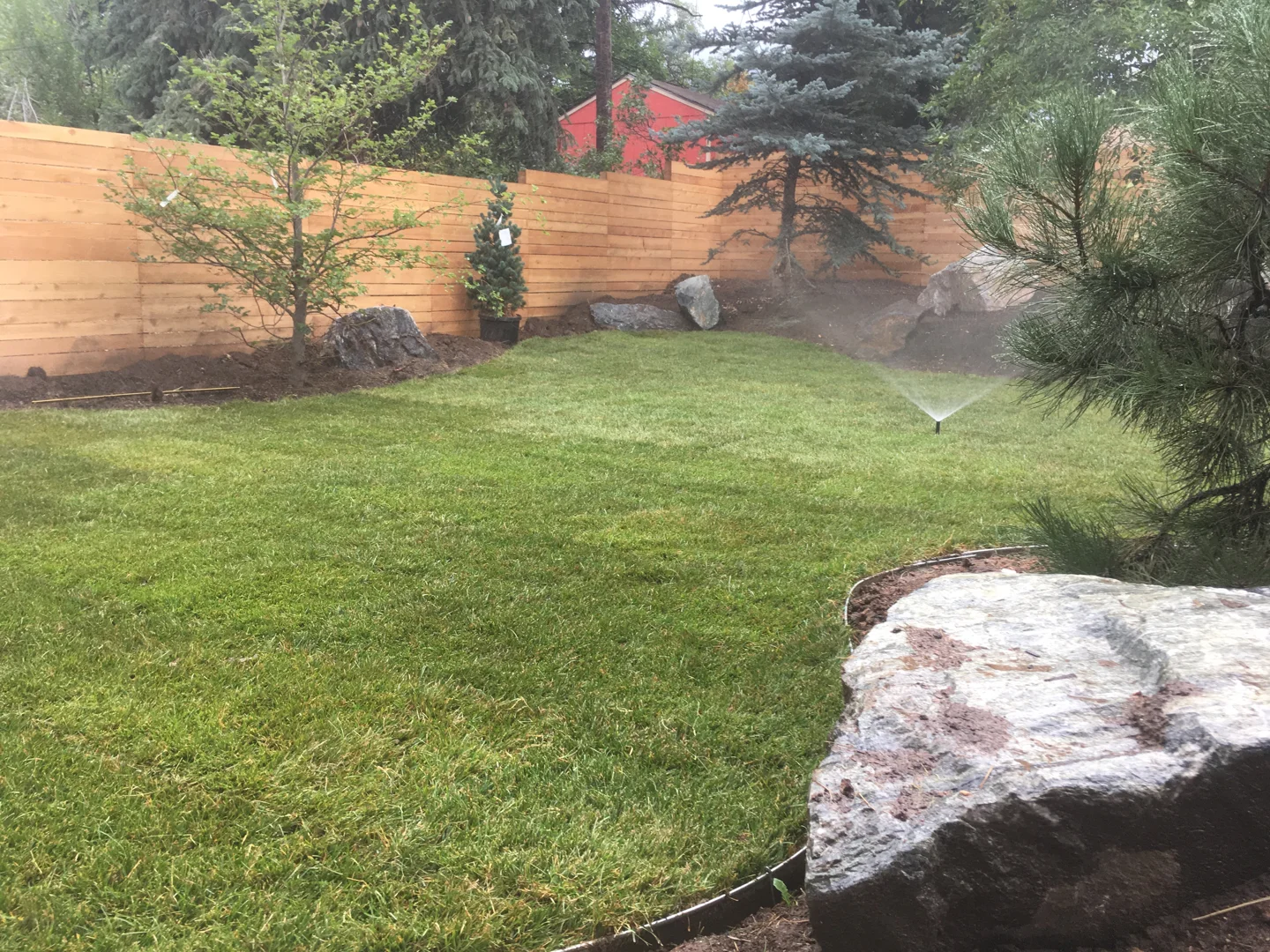
Slope, Grading, Drainage, and Site Conditions: The Factors Most People Overlook
Slope is one of the most common things homeowners do not think about until we are standing in their yard together. By that point, it has often already shaped decisions that need to be revisited.
A few site-specific considerations that belong in any honest fencing conversation:
- Sloped lots: Require either a stepped fence design (fence sections that follow the slope in a staircase pattern) or a racked design (fence that follows the grade continuously). Not all materials perform equally in both applications.
- Post depth and footing design: Matters more on slopes and in Front Range soil conditions. Posts installed without adequate depth in variable soil are more likely to shift over time.
- Drainage around fence posts: Affects long-term performance significantly. Posts installed in low-lying areas or without proper drainage planning can heave in freeze-thaw conditions faster than posts on well-drained soil.
- Existing infrastructure: Including irrigation lines, retaining walls, and hardscaping needs to be mapped before installation begins to avoid costly conflicts mid-project.
Addressing considerations such as slope, drainage, and grading in the design phase costs far less than correcting them after the fence is in the ground.
Fencing as Part of a Complete Outdoor Design
Here is what separates a fence that looks right from a fence that feels right: the ones that feel right were designed alongside everything else.
Material choices interact with adjacent surfaces. A cedar fence next to a flagstone patio reads differently than the same fence next to a concrete pad or a xeriscape garden. Gate placement determines traffic flow through the yard. Post locations need to account for irrigation lines. Fence height and style affect how plantings are layered for privacy and visual interest.
When fencing is planned as part of a complete outdoor design rather than added on separately, the result is a yard that feels cohesive and intentional. When it is treated as a standalone trade handled by a separate contractor on a separate timeline, the result is often a yard that feels assembled rather than designed.
Stone & Leaf manages the full scope under a single contract: design, hardscaping, fencing, irrigation, drainage, and planting. You work with one company, one contact, and one clearly scoped budget from estimate through final walkthrough. Visit our hardscaping and fencing services page to see how fencing fits into the complete outdoor installations we build, and be sure to explore the full range of landscaping services we offer across Boulder and the Front Range.
Frequently Asked Questions About Fencing in Boulder
Do I need a permit to build a fence in Boulder?
In most cases, no. The City of Boulder exempts fences under 7 feet from building permit requirements. However, if your property is in a floodplain, a wetland, a historic district, or is individually landmarked, additional processes apply before construction can begin. Always verify with the Boulder Planning Department for your specific address.
Does my HOA have different rules than the city?
Often, yes. HOA guidelines can be more restrictive than city code on fence height, materials, colors, and styles. City code sets the minimum standard. Your HOA may impose additional requirements above and beyond that. Check both independently before you commit to a design or order materials.
What is the best fence material for Boulder's climate?
here is no single answer, because it depends on your priorities. Cedar is the most popular natural-aesthetic choice but requires consistent maintenance in Boulder's high-UV environment. Composite and vinyl offer lower maintenance with higher upfront cost. Aluminum and ornamental metal handle Front Range conditions well and require minimal upkeep. We recommend choosing based on your function, your maintenance willingness, and your budget across the full lifecycle of the fence, not just the installation day.
How does a sloped yard affect fence installation?
Slope requires either a stepped or racked fence design, and it affects post depth, footing requirements, and drainage planning around the base of the fence. It is one of the most commonly overlooked factors in a fencing project and one of the most important to address in the design phase rather than mid-installation.
Can Stone & Leaf handle fencing as part of a larger landscaping project?
Yes, and this is actually how most of our best fencing projects come together. We design and install fencing as one component of complete outdoor installations that include patios, hardscaping, irrigation, drainage, and planting. Managing everything under a single contract means the fence is planned in coordination with the rest of the yard, not bolted on afterward.Schedule a free on-site consultation and we will walk your property together and talk through what makes sense for your space.
Ready to Talk Through Your Fencing Project?
The right fence for your Boulder property comes down to three things: how you want to use the space, which materials will actually perform in Colorado’s climate, and how the fence fits into the larger picture of your outdoor design.
We have been helping Front Range homeowners work through exactly those questions since 2008. Owner Hayden Griess is on site every day, every project. One contract. Transparent pricing with a clearly defined not-to-exceed cap. No juggling multiple contractors.
Visit our hardscaping and fencing page to learn more about what we install, or contact us to schedule your free on-site consultation. We will bring the tape measure and the honest advice.
Stone & Leaf Landscaping has served Boulder and the surrounding Front Range communities since 2008. Visit our homepage to learn more about who we are and how we work.
Leave a Reply